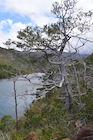
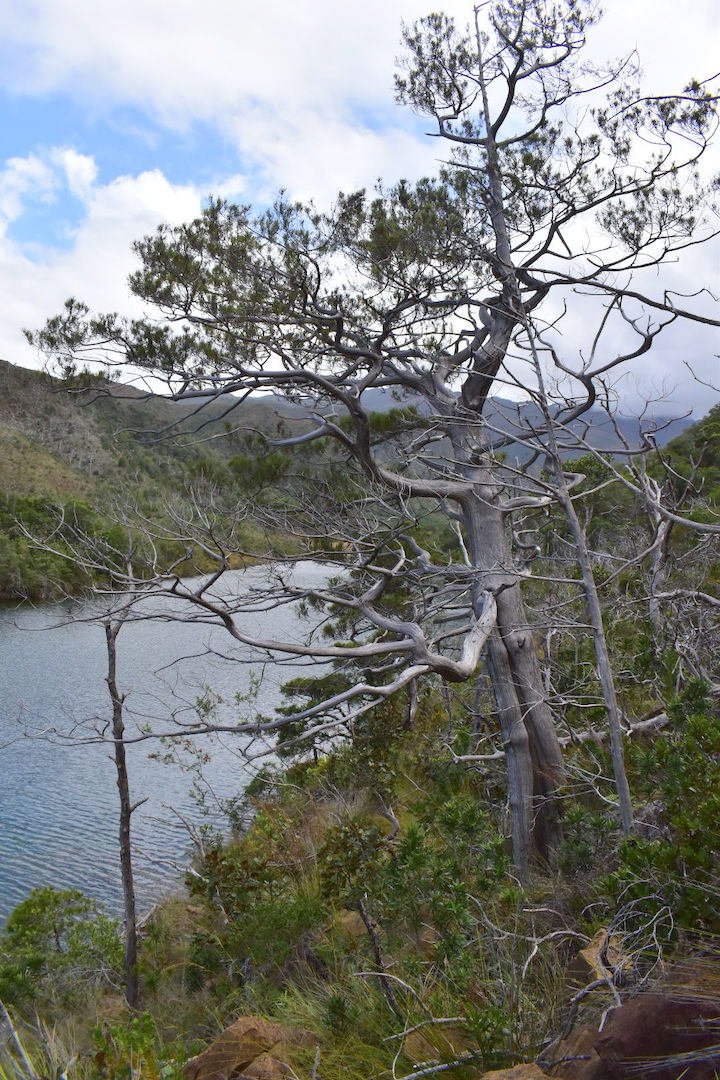
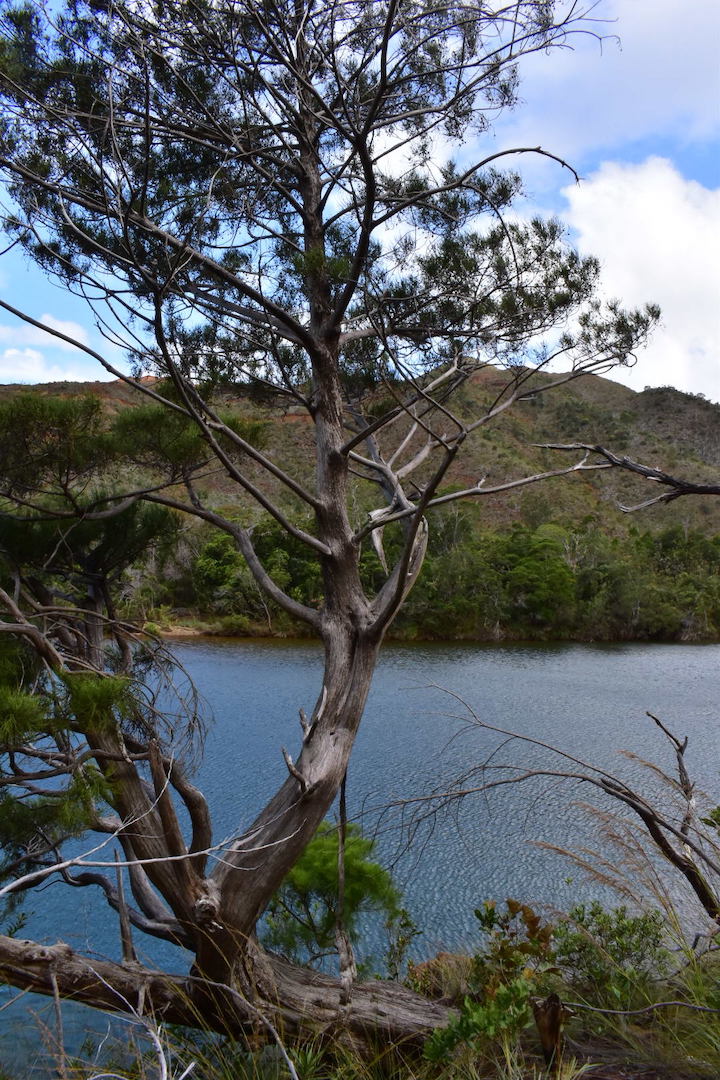
A tree in habitat, iNaturalist observation 38111557 [Joey Santore, 2020.01.30]
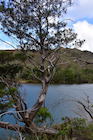
A tree in habitat, iNaturalist observation 38111557 [Joey Santore, 2020.01.30]
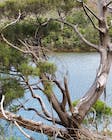
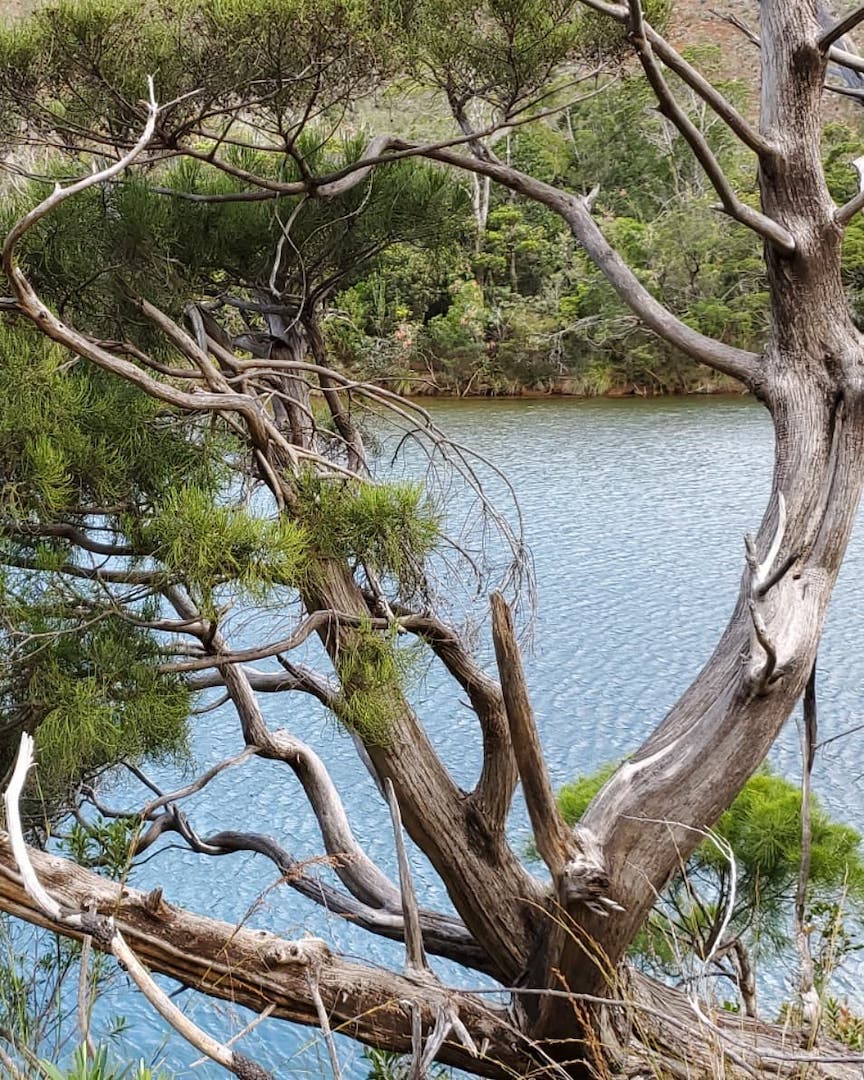
A tree in habitat [Adam Black, 2020.01.30, Facebook post].
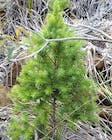
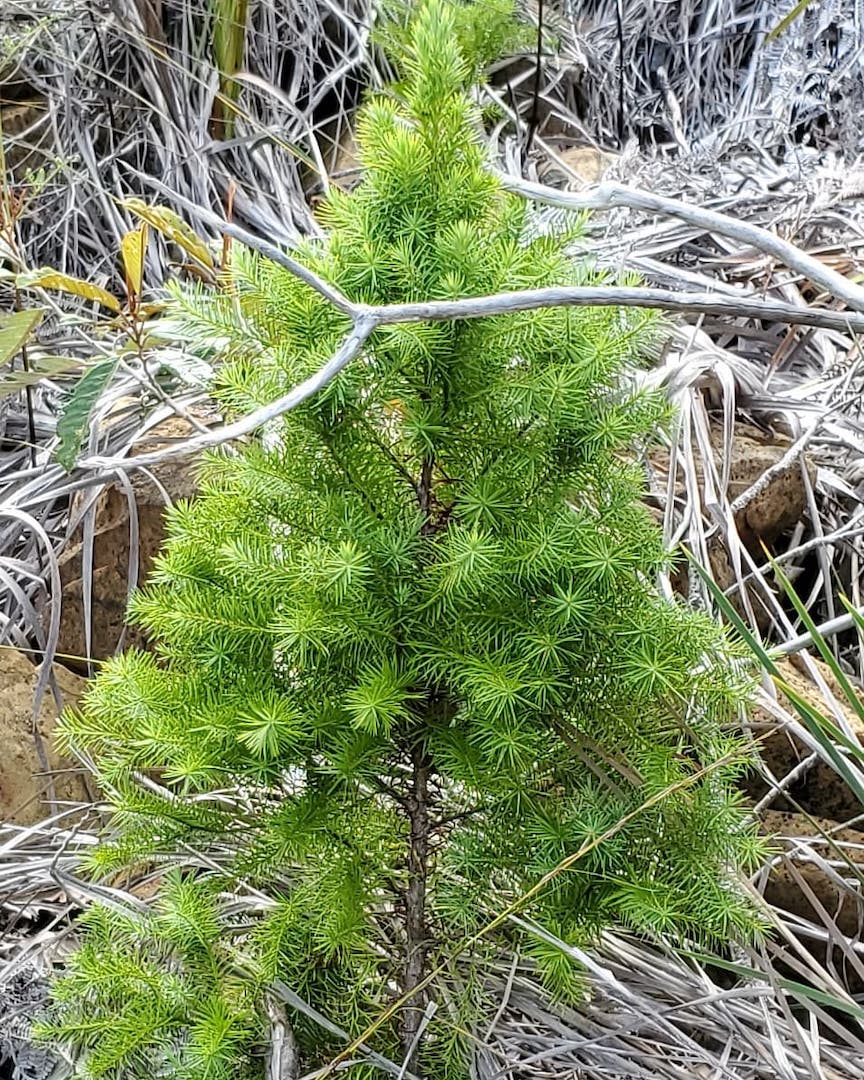
A young sapling in habitat [Adam Black, 2020.01.30, Facebook post].
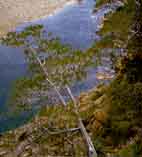
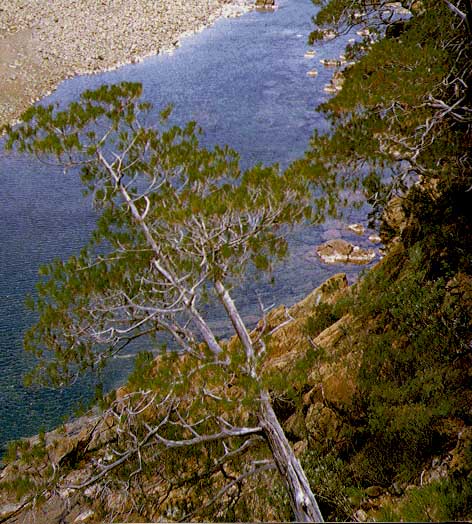
This stand occupies an isolated valley that has suffered still little from human interventions (Schmid 1981).
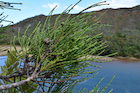
Foliage on a tree in habitat, iNaturalist observation 38111557 [Joey Santore, 2020.01.30]
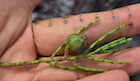
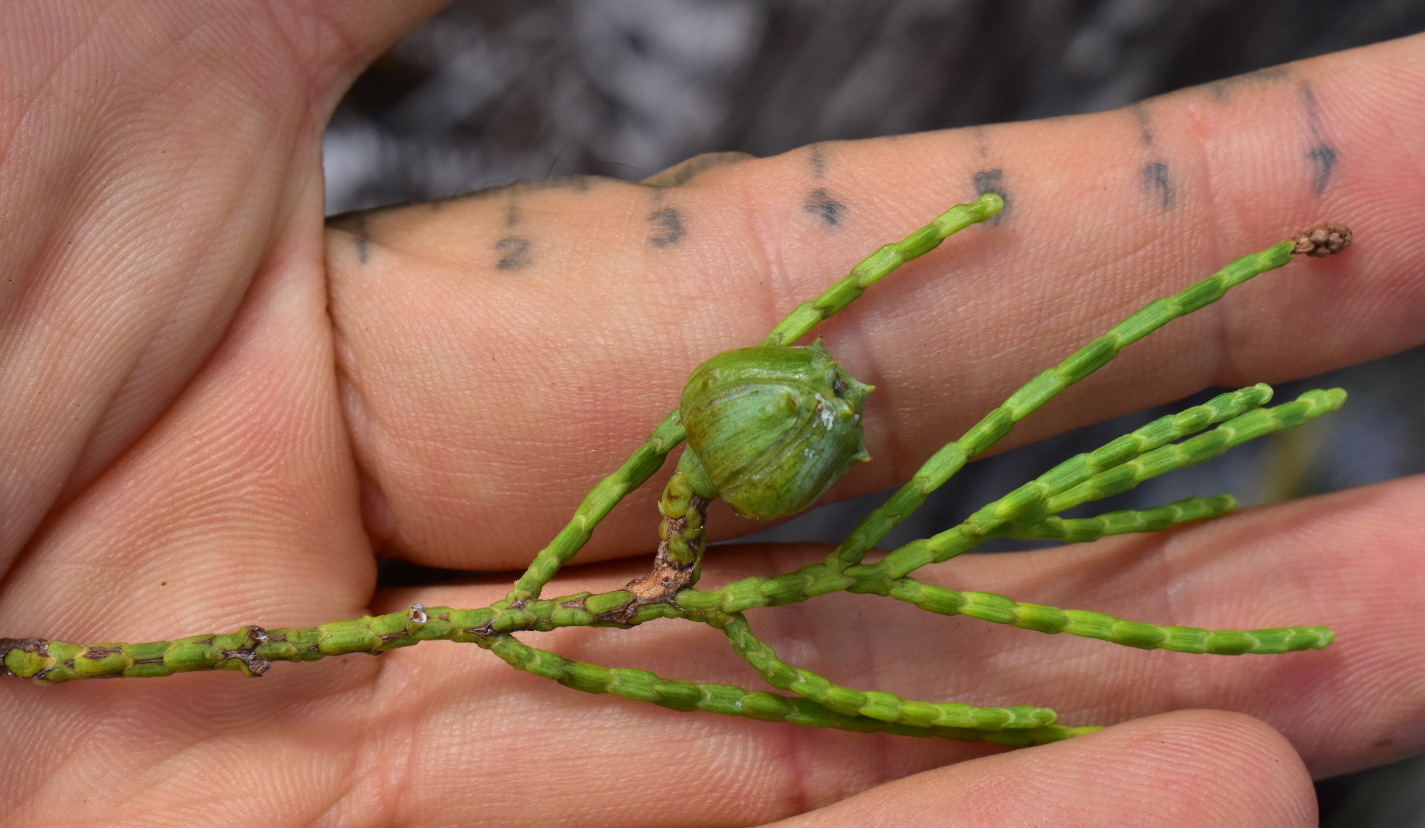
Detail of foliage and an unripe cone, iNaturalist observation 38111557 [Joey Santore, 2020.01.30]
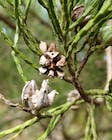
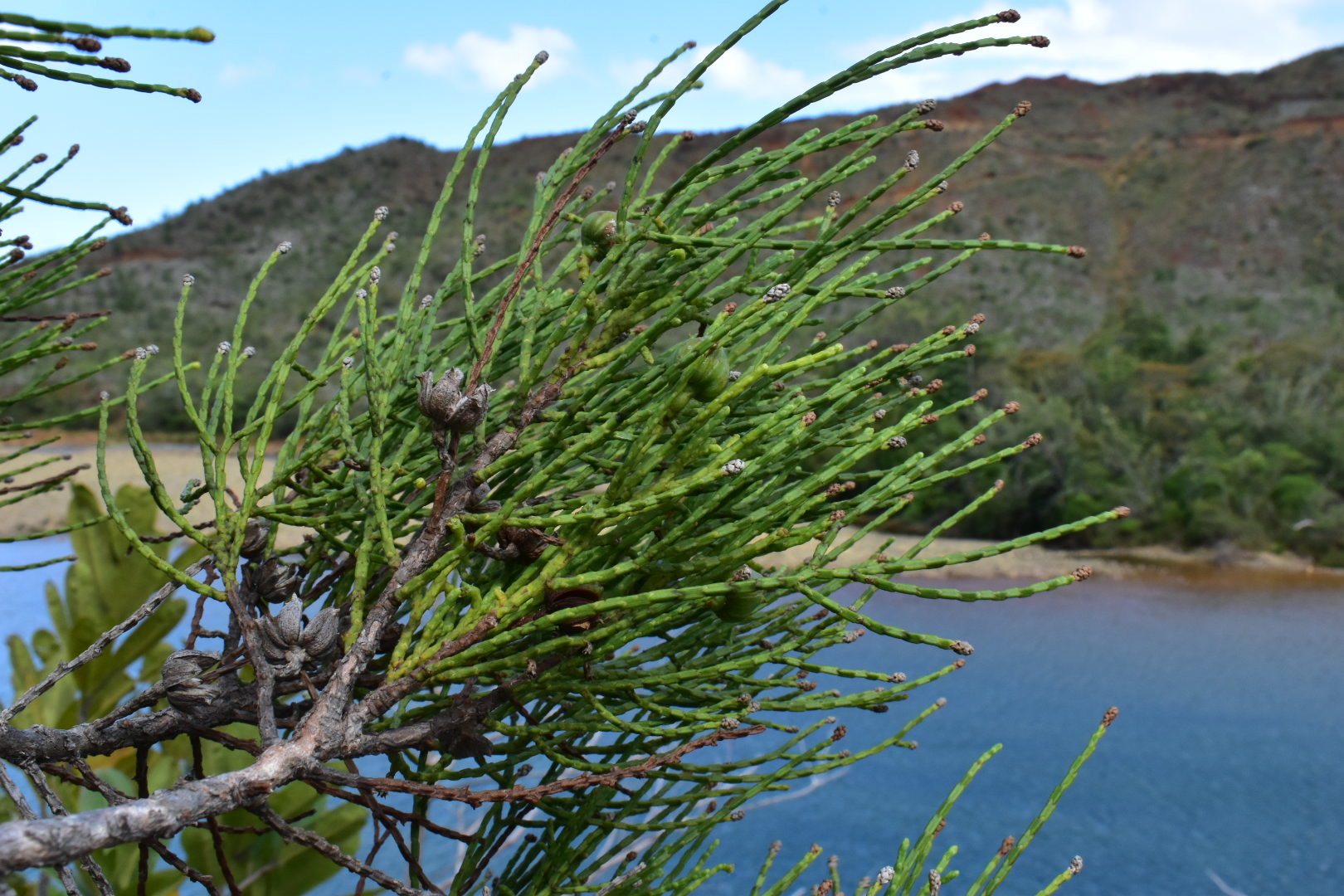
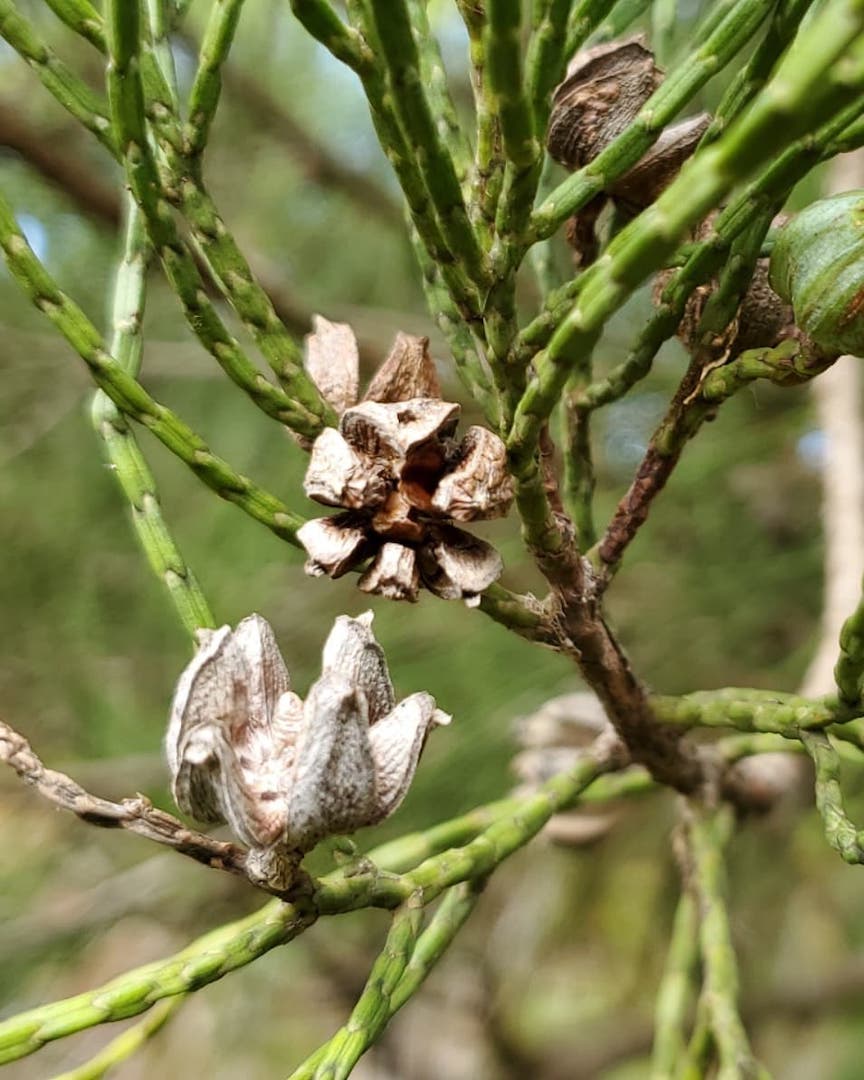
Foliage and prior year's cones [Adam Black, 2020.01.30, Facebook post].
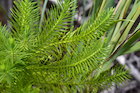
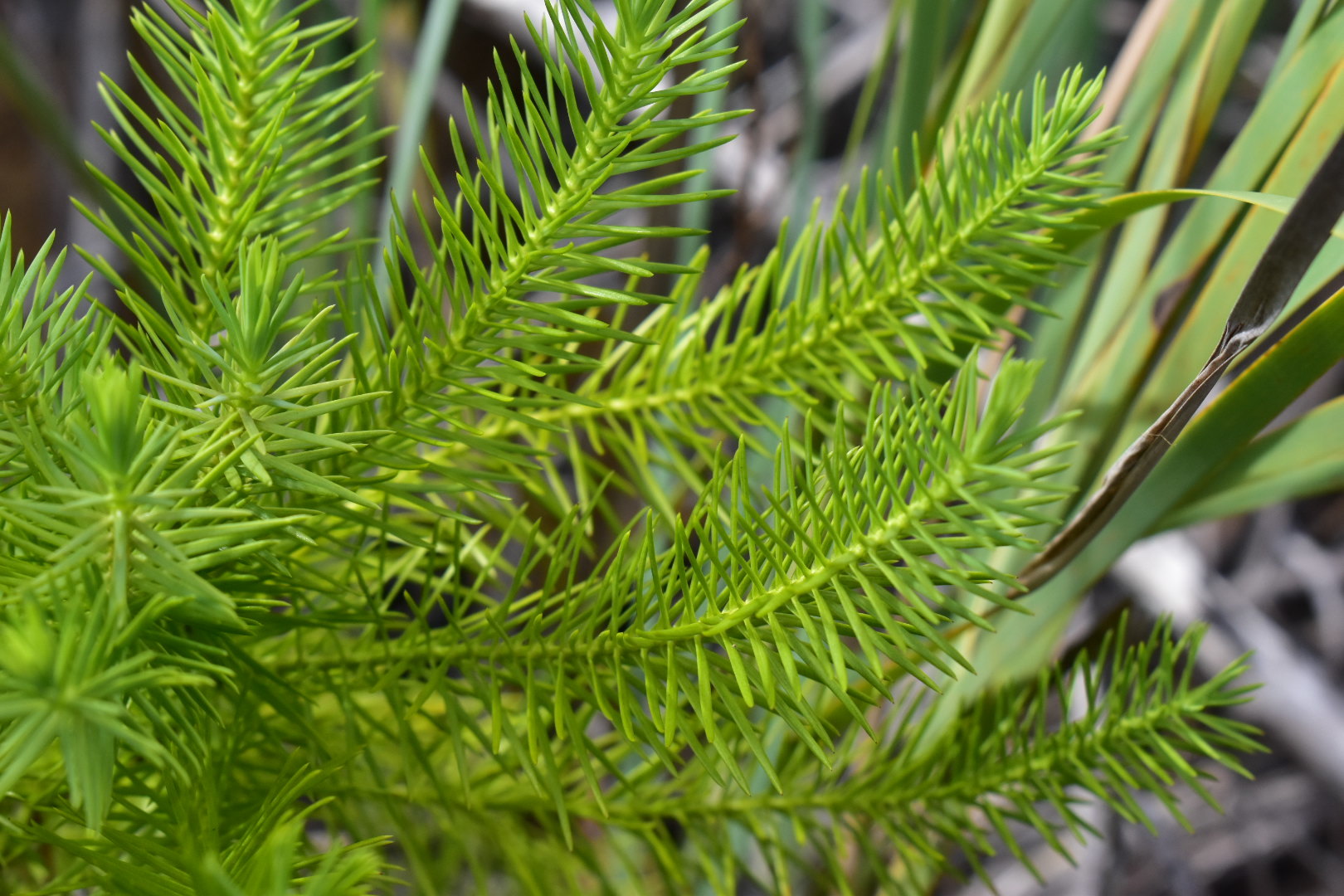
Juvenile foliage, iNaturalist observation 38111557 [Joey Santore, 2020.01.30]
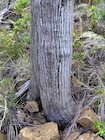
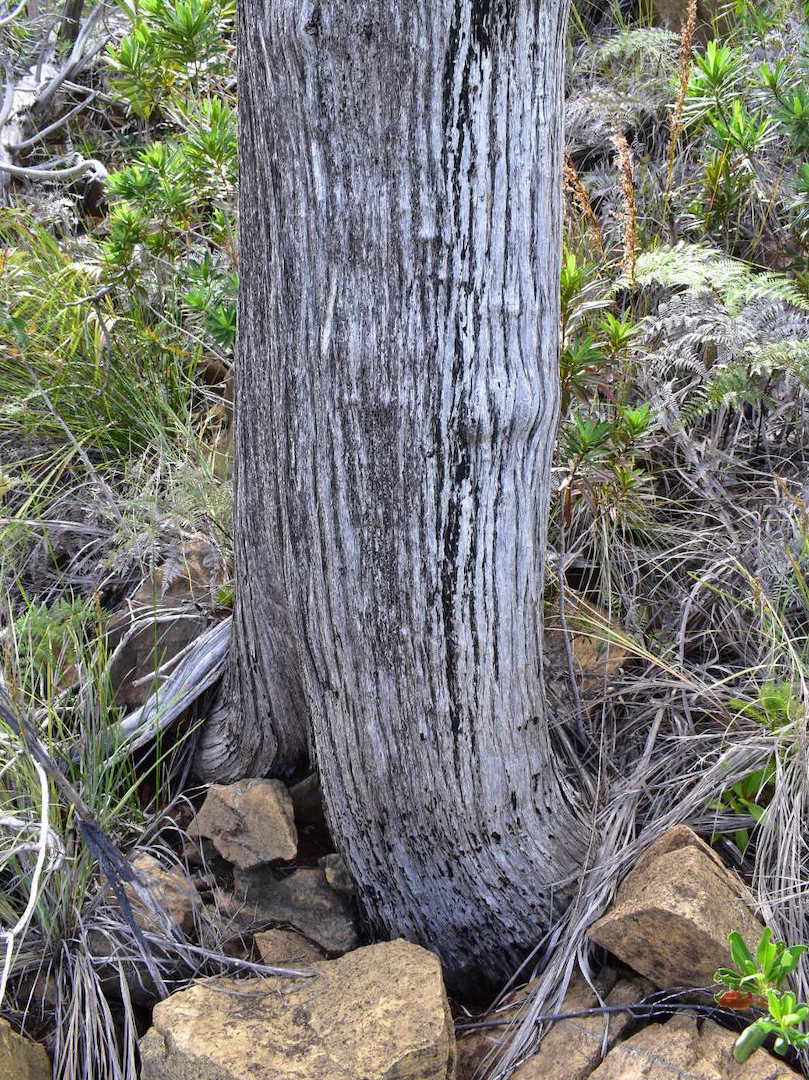
Bark on a tree in habitat, iNaturalist observation 38111557 [Joey Santore, 2020.01.30]

Callitris sulcata
(Parlatore) Schlechter 1906
Common names
Sapin de Camboui [French], Camboui cypress-pine.
Taxonomic notes
Molecular studies put C. sulcata and C. pancheri together in a clade that has been distinct ever since the 5 extant Callitris clades diverged about 30 million years ago (Larter et al. 2017).
Synonymy:
- Frenela sulcata Parlatore 1862;
- Octoclinis juniperoides Carrière 1867;
- Frenela balansae Brongniart et Grisebach 1869;
- Callitris balansae (Brongn. et Gris.) Schlecter 1906.
- Nothocallitris sulcata (Parl.) A.V. Bobrov & Melikyan 2006.
Description
Evergreen shrubs or trees to 12 m tall and 40 cm dbh, commonly with a single trunk, sometimes forked, branching low, with an irregular, broad and usually open crown. Bark scaly, up to 20 mm thick, fissured, stringy, exfoliating in long strips, light brown but weathering gray. Foliage-bearing twigs in tufts at ends of main branches, assurgent or erect, ultimate twigs long, triangular in cross section, 0.5 mm thick, covered with closely appressed leaves, green, persistent. Leaves of two types on plants up to about 1 m tall. Juvenile leaves acicular, pale green, 1-2 cm long. Adult (scale) leaves in alternate whorls of 3, decurrent, closely appressed, apices appressed or some free especially on some leading shoots, linear, 3-7 × 0.7-1 mm, obtusely keeled, margins erose-denticulate near an obtuse or acute apex; epistomatic, stomata in two narrow marginal bands; abaxial surface smooth, green. Pollen cones solitary and terminal on ultimate branchlets, ovoid or ovoid-oblong, 3-5 × 1.5-2.5 mm, yellowish green turning light brown; microsporophylls 9-15, in alternate whorls of 3, peltate-triangular, with erose-denticulate margins, obtuse or acute, bearing 4-6 abaxial pollen sacs near the lower margin. Seed cones terminal on short, thin, leafy shoots, solitary, maturing in 1 year, falling soon after seed dispersal, ovoid-globose to subglobose when closed, 8-11 × 7-10 mm, smooth, finely rugose when open, green maturing a dull brown. Bract-scale complexes in 2 alternate whorls of 3, not opening very wide; upper ones only slightly larger, 7-10 × 5-6 mm, oblong, thick; lower ones 4-5 mm wide; a prominent and acute umbo below the apex of each scale; adaxial surface rugose, red-brown or dark brown with inconspicuous seed marks. Columella relatively large, 3-4 mm long, irregularly angular, 1.5-2 mm wide, narrowed at base. Seeds usually 2 at base of each upper scale, ovoid or triangular, flattened, 4-5 × 3 mm, light brown; wings 2 on each side, up to 7 x 2.5 mm, unequal in shape and size (Farjon 2010).
Distribution and Ecology
New Caledonia, in the valleys of the Comboui, Dumbea and Tontouta Rivers and some of their tributaries. The climate is tropical, with abundant precipitation throughout the year. Found on ultramafic soils, on slopes or in valleys close to streams. Occurs in scrubland (maquis minier) and in gallery forest, at elevations of 40-200 m. Commonly in thickets, or scattered with conifers such as Callitris pancheri, Dacrydium araucarioides, D. balansae, and Podocarpus novae-caledoniae; and many species of ferns and angiosperms (Farjon 2010).
This map shows herbarium records of Callitris species native to New Caledonia. Red is C. neocaledonica, yellow is C. pancheri, and green is C. sulcata. Click on an icon for further information. Distribution data from GBIF (2020.03.30), edited to remove duplicates.
Zone 10 (cold hardiness limit between -1°C and +4.4°C) (Bannister and Neuner 2001).
This species is rare within its limited distribution. Threats include timber extraction (although this species is not an important timber tree, it is likely to be felled with other trees), fire, and other anthropogenic disturbances. The existing protection in ad hoc river bank reserves is inadequate and ex situ propagation is desirable to ensure its continued survival (Farjon 2010).
Remarkable Specimens
Cabalion et al. (2003) report a sample dated using dendrochronological methods at 345 years. The tree was dead when sampled.
Ethnobotany
Traditionally it was used in the construction of wooden houses; the wood is very resistant to rot and to insects. Posts are still recovered in old houses and used for new construction. Historically, the wood was used for railway sleepers. In 2001, in a traditional sacred place located in St Joseph de Borendi, a monument was built in memory of the renovation of the church, and six barked trunks of old seed bearing individuals have been erected as permanent symbols of the six clans of the local tribe united with the church (Cabalion et al. 2003).
Observations
On the east coast of New Caledonia, on the lower Comboui River, is the last substantial population of C. sulcata, which the local municipality (Thio township) tries to protect (P. Cabalion email 2006.04.25).
Remarks
The epithet is from the Latin word for "groove", sulcatus, and refers to the appearance of the twigs.
Citations
Cabalion, P., E. Hnawia E., C. Menut C., J. Waikedre, and J. Patissou. 2003. Protection needed for Callitris sulcata, an endemic but very threatened resource from southern New Caledonia. Poster presentation at the symposium on Preservation and Ecological Restoration in Tropical Mining Environments, Noumea IRD Centre, New Caledonia, 15-20 July 2003.
Larter, M., S. Pfautsch, J.-C. Domec, S. Trueba, N. Nagalingum, and S. Delzon. 2017. Aridity drove the evolution of extreme embolism resistance and the radiation of conifer genus Callitris. New Phytologist 215:97-112.
Schlechter, R. 1907. Beitrage zur Kenntnis de Flora von Neu-Kaledonien. Botanische Jahrbücher für Systematik, Pflanzengeschichte und Pflanzengeographie 39:1-274 (p.16). Available: Botanicus.org, accessed 2012.11.25.
See also
Association Endemia, a site devoted to New Caledonian species. Has excellent photos, a range map, and other information. In French.
The species account at Threatened Conifers of the World.
Farjon (2005) provides a detailed account, with illustrations.
de Laubenfels (1972).

 Back to top