Conservation Status

Cedrus atlantica
(Endl.) Manetti ex Carrière 1855
Common names
Atlas cedar, Cedre de l'Atlas [French], アトラスシ-ダ- [Japanese].
Taxonomic notes
Very little morphological evidence exists to distinguish Cedrus atlantica from C. libani. In fact, all common morphological characters overlap between the two taxa (Farjon 2010). Nonetheless, molecular analyses have found consistent differences between the species of Cedrus and have found C. atlantica sister to a clade of C. libani and C. brevifolia, with an estimated divergence between the eastern and western Mediterranean taxa at about 23 million years ago (Qiao et al. 2007). Genetic and fossil data indicate that C. atlantica has experienced substantial migrations during the Quaternary period. There are two major metapopulations, one in the Rif and Middle Atlas mountains of Morocco and the other from the Middle Atlas mountains eastward through the Tell Atlas and Aurès mountains of Algeria. C. atlantica passed the Late Glacial Maximum in at least three disjunct refugia along the coast of the Mediterranean Sea, and the Middle Atlas, which currently supports the largest populations of the species, has been colonized only during Holocene time (Terrab et al. 2008).
Syn: C. africana Gord. ex Knight; C. libani A. Rich. var. atlantica (Endl.) Hook. f. 1862; C. libani A. Rich. subsp. atlantica (Endl.) Batt. & Trab. 1905. Type not designated.
Description
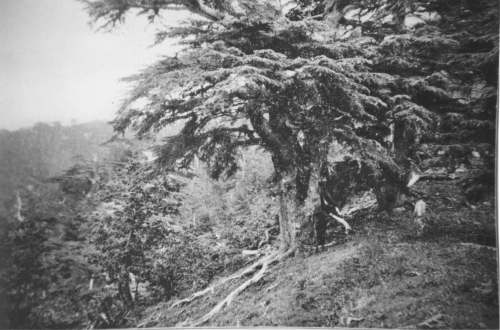
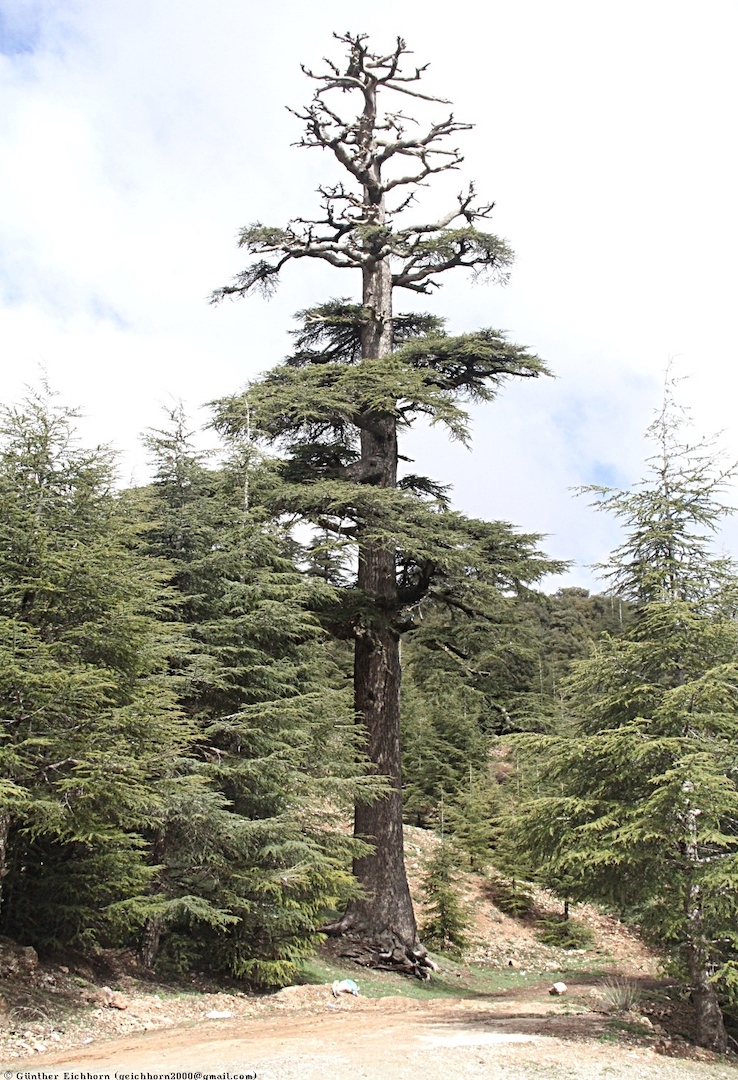
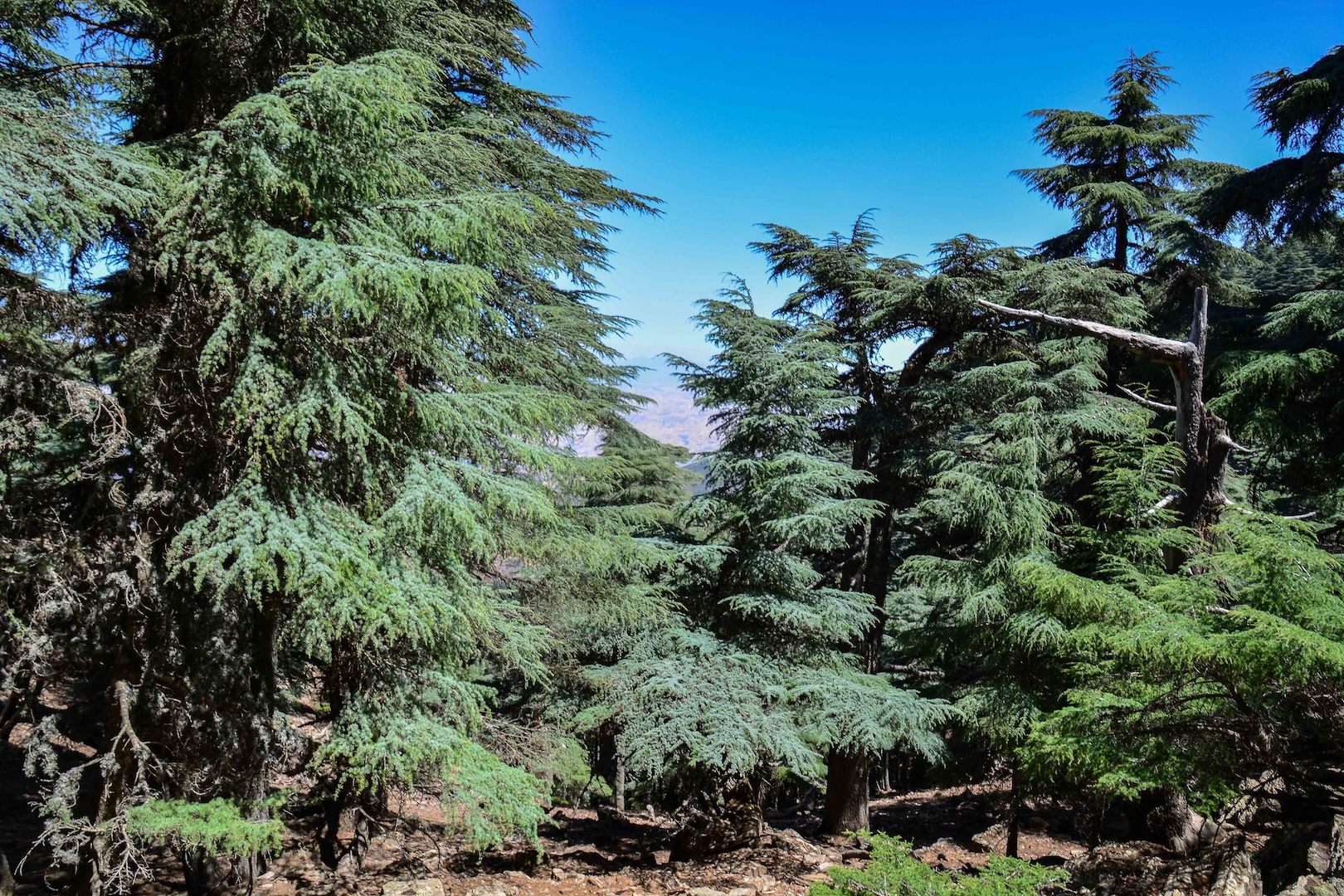
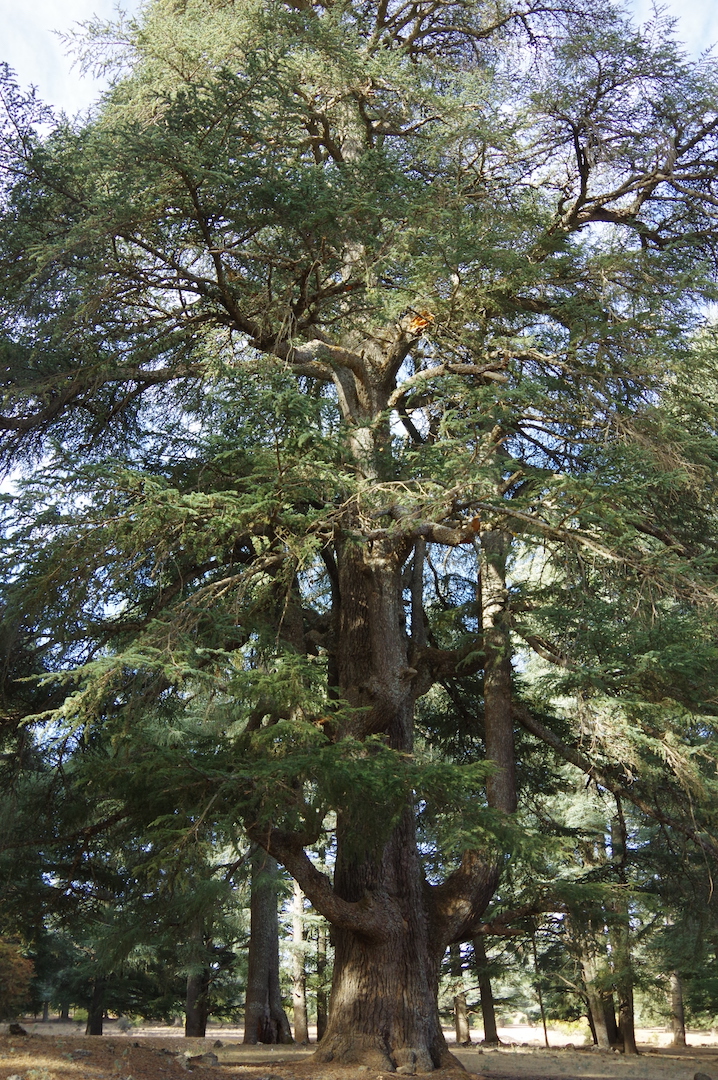
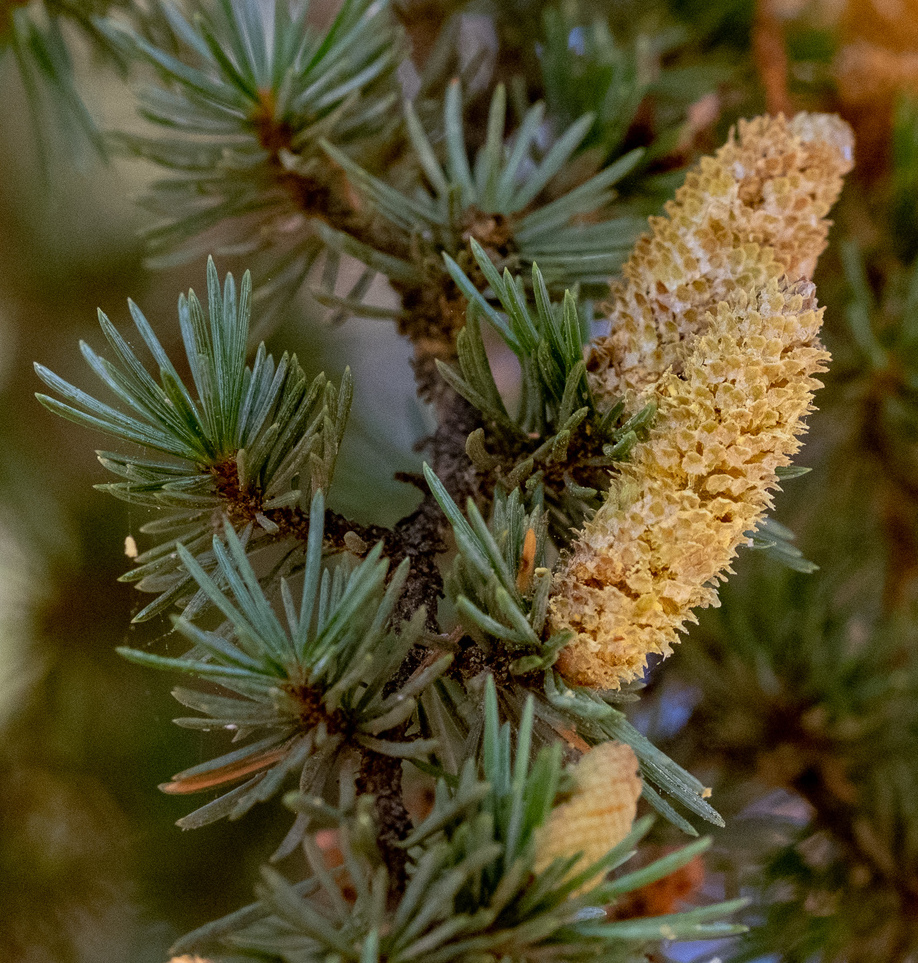
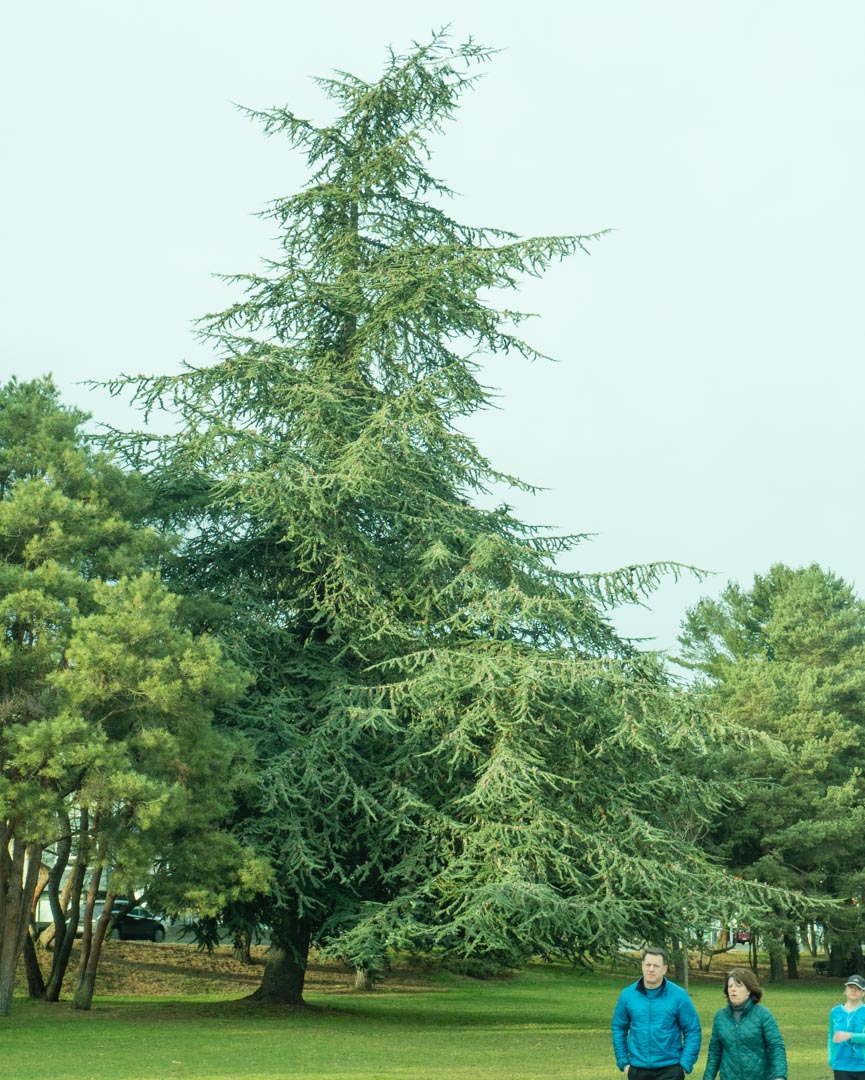
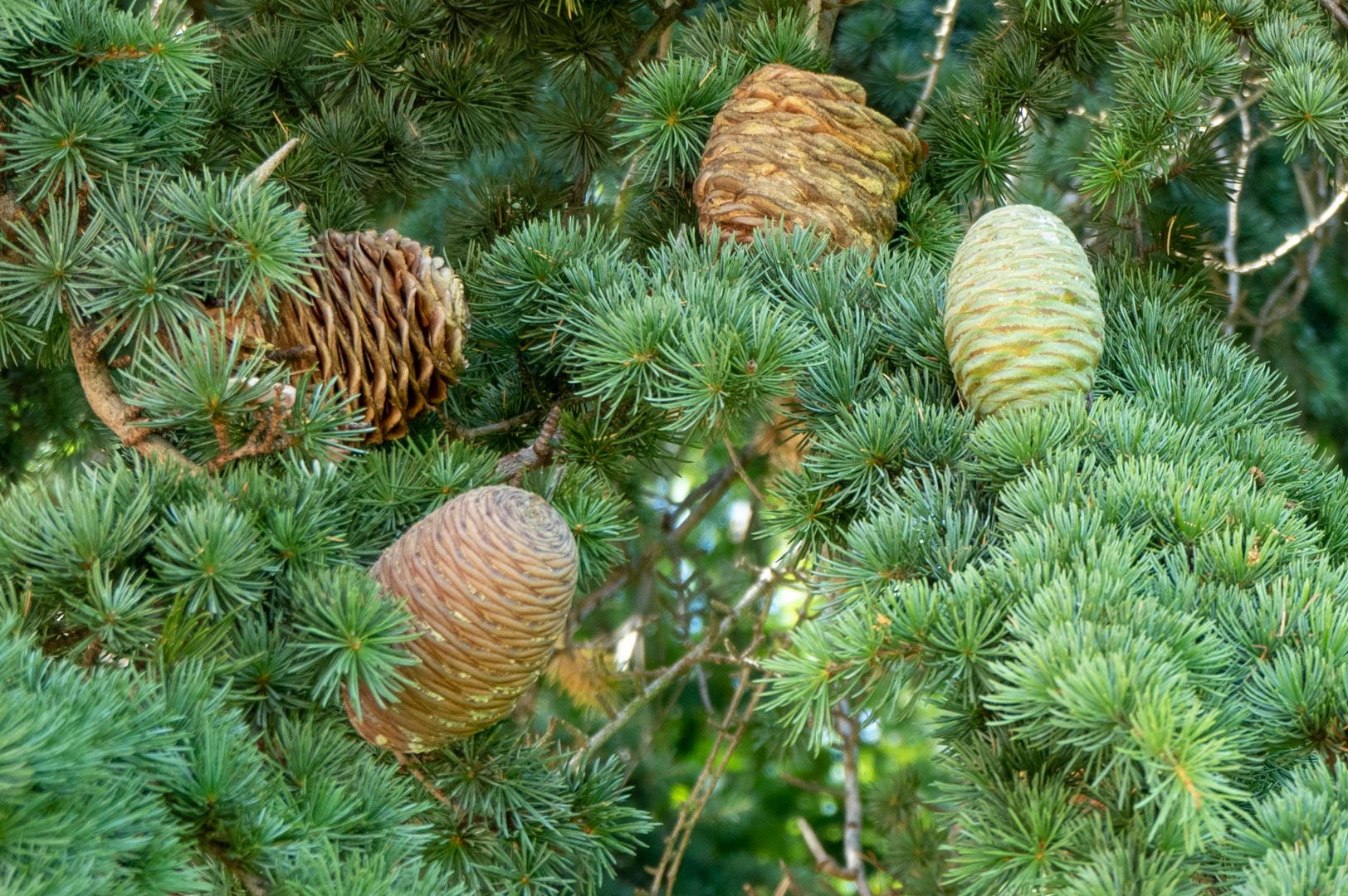
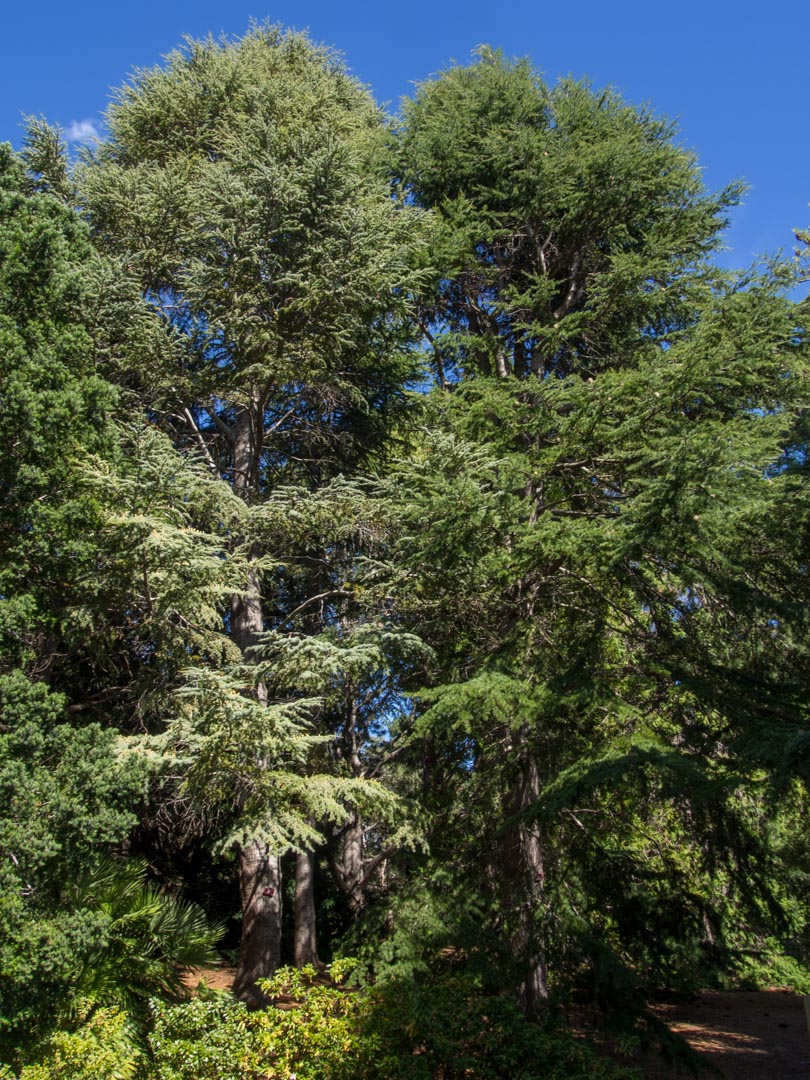
Trees to 40 m tall and 200 cm dbh, often smaller at high elevations, usually with a single columnar trunk, often forked. Crown broad-conical, often flattened or irregular in older trees, composed of massive primary branches, with foliar units often arranged in horizontal planar groups. Bark of flaky plates, fissuring with age, rough, reddish brown weathering dark gray. Twigs short, firm, gray-brown, except for a pliant and slender leading shoot. Vegetative buds ovoid or globose, 1.5-3 mm diameter; bud scales broad-ovate, reddish to very dark brown, deciduous. Leaves on long shoots spirally arranged, more crowded near base of shoot; on short shoots densely crowded, 20-45, spreading radially, 15-25 × 1-1.5 mm, linear, straight to curved, quadrangular, with stomata on all surfaces, dark green, not to very glaucous; apex acute to acuminate. Pollen cones terminal on short shoots, erect, subtended by leaves, falling soon after shedding pollen, 3-4 cm long (i.e. very large), rosy yellow aging to pale brown. Seed cones also terminal on short shoots, erect, sessile, woody in the 2nd year, ovoid to cylindrical with an obtuse to inset apex, 5-8 × 3-5 cm, light green ripening to pale brown, dehiscent with a persistent rachis. Seed scales thin, coriaceous, 2-3 cm long and 2.5-2.5 cm wide, glabrous, pubescent at base, orange-brown, margin entire. Seeds ovoid-conical, brown, 8-13 mm long with a 18-25 mm broad-cuneate wing (Farjon 2010 and pers. obs.). Compared to C. libani, the seed and pollen cones are a bit shorter on average, with C. libani seed cones generally 8-12 cm long and pollen cones to 5 cm long. C. deodara generally has a drooping leader and branch tips, has the longest pollen cones (>5 cm) and it differs from all Mediterranean cedars in phenology, flowering in the fall instead of in the spring and summer. See García Esteban et al. (2004) for a detailed characterization of the wood anatomy.
Distribution and Ecology
Morocco & Algeria: the Atlas and Rif Mountains, 1370-2200 m, elevation, with a winter-wet climate having 1000-2000 mm precipitation annually, typically with significant snowfall. Soils are usually rocky and calcareous. C. atlantica grows in pure stands, or mixed with conifers such as Abies sp. and Taxus baccata, and angiosperms such as species of Acer, Populus, Quercus, and Sorbus (Farjon 2010). Hardy to Zone 7 (cold hardiness limit between -17.7°C and -12.2°C) (Bannister and Neuner 2001).
Cedars of the Mediterranean; C. atlantica in blu. Distribution data from GBIF, 2021.02.17 and 2021.02.18.
Cedrus atlantica has suffered severe recent declines due to climate change and human activities. As recently as 1998 it was assessed as "Least Concern" but now ranks as "Endangered." It still has a fairly large estimated extent of occurrence, greater than 20,000 km2, and an area of occupancy between 1,300 and 1,500 km2, with seven main locations. However, range-wide declines of up to 75% in area of occupancy occurred between 1940 and 1982, and recent droughts have led to further declines in many parts of its range. This trend will continue if the regional climate continues to become more arid. Outbreaks of pests and diseases have exacerbated the situation (Linares et al. 2011, Thomas 2013).
Remarkable Specimens
Trees more than 200 cm DBH are exceptional; they have been recorded in Morocco, Spain, Italy, France, Belgium, the UK, and Ireland. Currently the largest diameter specimen was 900 cm girth (286 cm dbh) in 2017 with a laser-measured height of 34 m; it occurs in the park of the Ospedale di Varese in Varese, Italy (Monumental Trees 2021). This is a two-tree fusion, however. All of the largest recorded ornamental specimens have a "shrub" growth form, meaning that they have multiple stems and limbs that diverge below breast height (1.40 m) and thus do not have a clear single stem. The largest tree in habitat appears to be in Morocco. It has a single-stem growth form; in 2015 it was 810 cm girth (258 cm diameter) at a height of 1.0 m (which is an anomalously large measurement due to a large burl; 210 cm DBH appears to be the approximate size) and was optimistically estimated to be 40 m tall (Monumental Trees 2021). The tallest accurately measured specimen is a single-trunk tree measured by Dominique Béziat at 43.8 m tall and 370 cm girth (118 cm dbh) in 2020, and grows on the grounds of Castel Mont, Jurançon, Pyrénées-Atlantiques, France (Monumental Trees 2021). The tallest recorded tree was in Lourdes, France and in 2017 was measured at 45.60 m, but was unfortunately cut down as a hazard tree (Monumental Trees 2017, Dominique Béziat email 2018.11.19).
A specimen 382 cm dbh and 30 m tall was recorded in Parco Castello, Piemonte, Montalenghe, TO, Italy (Alberi Monumentali d'Italia 2010). This tree was not otherwise recorded and may have since died.
The oldest known specimen, 1024 years, is documented in a tree-ring chronology covering the period 977-2001 (fully crossdated), collected near Ifrane National Park, Morocco, by Jan Esper, David Frank, Ulf Büntgen, Anne Verstege, Jürg Luterbacher, and Elena Xoplaki (doi.org/10.25921/jr2w-cx24). The 1024-year lifespan was shown in one living tree. The chronology was used in at least one paleoclimate study (Esper et al. 2007).
Ethnobotany
In North Africa, it is an important timber tree, producing a fragrant and durable wood used for construction, finish carpentry, and furniture. Its wood is also the source of cedarwood oil, an essential oil sold and used for medicinal purposes as well as in fragrances. Throughout the temperate regions of the world it is an extremely popular ornamental species; the glaucous cultivars are especially popular (Farjon 2010, Eden Botanicals 2021).
The species has also been useful in dendrochronology, with numerous collections by Charles Stockton, working in Morocco ca. 1984-1989. The climate-ring width relationship is explored by Till (1987).
Observations
In Morocco, the most popular places to see this species in habitat seem to be the Talassemtane National Park in the northern Atlas Mountains, and Cèdre Gouraud Forest and Parc national d'Ifrane, both in the Middle Atlas mountains. In Algeria, it can be found in Djurdjura National Park and the Djebel El Wahch Forest near Constantine, and perhaps most remarkably, in the mountains west of Babor, where it grows with Abies numidica.
Remarks
The epithet refers to the species' distribution in the Atlas Mountains.
Citations
Alberi Monumentali d'Italia. 2010. [A listing of big trees in Italy], http://www.inilossum.it/homepiante.html, accessed 2010.02.12, now defunct.
Barbey, A. 1934. Une reliquie de la Sapiniére Mèditerranéenne: Le Mont Babor. Monographie de l'Abies Numidica Lann., pag. 1-78.
Esper, Jan, David Frank, Ulf Büntgen, Anne Verstege, Jürg Luterbacher, and Elena Xoplaki. 2007. Long-term drought severity variations in Morocco. Geophysical Research Letters 34(L17702). https://doi.org/10.1029/2007GL030844.
Linares, J.C., Taiqui, L. and Camarero, J.J. 2011. Increasing drought sensitivity and decline of Atlas Cedar (Cedrus atlantica) in the Moroccan Middle Atlas Forests. Forests 2:777-796.
Qiao, C.-Y., J.-H. Ran, Y. Li, and X.-Q. Wang. 2007. Phylogeny and biogeography of Cedrus (Pinaceae) inferred from sequences of seven paternal chloroplast and maternal mitochondrial DNA regions. Annals of Botany 100:573–580.
Terrab, A., A. Hampe, O. Lepais, S. Talavera, E. Vela, and T. F. Stuessy. 2008. Phylogeography of North African Atlas cedar (Cedrus atlantica, Pinaceae): Combined molecular and fossil data reveal a complex Quaternary history. American Journal of Botany 95:1262–1269.
Thomas, P. 2013. Cedrus atlantica. The IUCN Red List of Threatened Species 2013: e.T42303A2970716. https://dx.doi.org/10.2305/IUCN.UK.2013-1.RLTS.T42303A2970716.en. Accessed 2021.02.17.
Till, C. 1987. The summary response function of Cedrus atlantica (Endl.) Carrière in Morocco. Tree-Ring Bulletin 47:23-36.
See also
Caraglio, Yves. [no date]. Mediterranean Pines and Cedars. amap.cirad.fr/Pines_cedars/species/cedreatl_archi.html (accessed 2006.11.01). This page describes the "Morphology and architecture of Cedrus atlantica Manetti ex Carrière."
Elwes and Henry 1906-1913 at the Biodiversity Heritage Library. This series of volumes, privately printed, provides some of the most engaging descriptions of conifers ever published. Although they only treat species cultivated in the U.K. and Ireland, and the taxonomy is a bit dated, still these accounts are thorough, treating such topics as species description, range, varieties, exceptionally old or tall specimens, remarkable trees, and cultivation. Despite being over a century old, they are generally accurate, and are illustrated with some remarkable photographs and lithographs.
Nicholson, R. 1986. Collecting rare conifers in North Africa. Arnoldia 46(1):20-29. Available: arnoldia.arboretum.harvard.edu/pdf/articles/678.pdf, accessed 2010.02.12.
The species account at Threatened Conifers of the World.

 Back to top