
The Gymnosperm Bookstore
In the course of developing the Gymnosperm Database, I have drawn on a wide array of information sources -- newspaper articles, articles from scientific journals, academic and popular books, historical materials, Internet data sources, e-mail from readers, conversation with conifer and cycad lovers (I'm afraid I have yet to meet a Gnetum nut), and personal field experience. Wherever possible, I have included links to the Internet data sources. This page provides access to commercial sources for printed matter. The first such source is the online bookstore, Amazon.com. As an Amazon Associate I earn from qualifying purchases. That means, anything you purchase from Amazon using the links on this page will return a small payment to me, which I will use to help defray the costs of maintaining this website. The second such source is any other online link to book sales, which I will use for books that Amazon does not carry. The third source, which I recommend you use to search for journal articles and some other materials from the technical literature, is Google Scholar. This will help you identify the existence of a relevant article and in most cases there will be a way to access it, if only by paying an exorbitant sum of money. It is usually better to use your local library, which can in many cases get these journals on interlibrary loan. It seems that libraries do still have their uses in this digital age.
All books are listed alphabetically, by author. Books with a link may be purchased by clicking on the link or the image.
Bookfinder
|


Buy it! (Softcover)
Buy it! (Kindle)
A highly readable and informative overview of the natural and human histories and ecology of ponderosa pine forests of the Southwest.
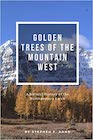
Stephen F. Arno. 2021. Golden Trees of the Mountain West: A Natural History of Larch.
Buy it! (Softcover)
Steve Arno started his career writing about western and alpine larches and has been studying them ever since. This is a very readable account of his experiences with them.
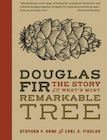
Stephen F. Arno and Carl E. Fiedler. 2020. Douglas Fir: The Story of the West’s Most Remarkable Tree.
Buy it! (Hardcover)
Buy it! (Kindle)
An engrossing book about the botany, history, and ecology of Pseudotsuga menziesii, too long neglected in the popular literature. I wrote this review of it.
Stephen F. Arno and Ramona P. Hammerly (Illustrator). 2007. Northwest Trees (second edition). Seattle: Mountaineers Books.
Buy it! (Softcover)
Buy it! (Kindle)
Excellent illustrations and fine nature writing. This and Discovering Sierra Trees are well worth owning.
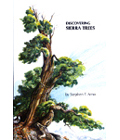
Stephen F. Arno and Jane Gyer (Illustrator). 1986. Discovering Sierra Trees.
Buy it! (Softcover)
Comprehensive guidebook of all the coniferous and broad leaved-trees of the Sierra Nevada. Discusses each of 36 different species including: description, age, size, characteristics, reproduction and historical highlights. Includes black and white pen drawings of the species and their foliage and cones, along with a distribution profile of the various trees on both the east and west sides of the Sierra.
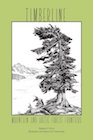
Stephen F. Arno and Ramona P. Hammerly (Illustrator). 1984. Timberline: Mountain and Arctic Forest Frontiers.
Buy it! (Softcover)
One of my favorite books, ever. For over 30 years I have turned to it whenever I wanted to find a new place to find beautiful ancient trees growing in high mountains. It also provides a superb education on the ecology and environment of trees in high mountains, and in the arctic.
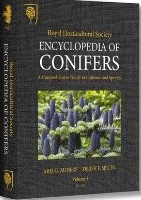 Aris G. Auders and Derek P. Spicer. 2012. Royal Horticultural Society Encyclopedia of Conifers: a Comprehensive Guide to Cultivars and Species.
Buy it! (Hardcover)
This seems to be the era of conifer encyclopedias; nothing of note for decades, and then comprehensive treatments published in 2009 (Eckenwalder), 2010 (Farjon), and twice in 2012 (Debreczy and Racz, Auders and Spicer)! Of the four, this is the only one that provides in-depth treatments of cultivars, and though I haven't seen the books yet, I trust Derek Spicer to have done a very thorough job of it. Hard to find and expensive. May also be available from the Royal Horticultural Society.
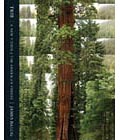 James Balog. 2004. Tree: A New Vision of the American Forest.
Buy it! (Hardcover)
Buy it! (Softcover)
When released, this was basically a BIG picture book with some entertaining text about people obsessed with trees. The pictures are in many ways unique and memorable; in particular, Balog has done a better job than any other professional photographer of capturing Sequoia sempervirens on camera. When I want to show people why canopy research is so cool, this is the book I show them. Note: The book linked here is in a much smaller format than the original publication. You may need to go to the used market to find the full size version, which measures 40 x 31 cm.
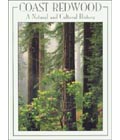 Barbour, Lydon, Borchert, Popper, Whitworth and Evarts. 2001. Coast Redwood: A Natural and Cultural History.
Buy it! (Hardcover)
Buy it! (Softcover)
This was the first illustrated book to focus exclusively on the natural and cultural history of the world's tallest tree. This edition contains 230 color images and 100 black and white historic photos and describes the origins, distribution, life history, ecology, and wildlife associated with coast redwood. It also presents the evolution of redwood logging and chronicles the remarkable 100-year battle for redwood preservation, from Big Basin to Headwaters Forest.
 Charles C. Beck and Charles B. Beck (Editor). 1988. Origin and Evolution of Gymnosperms. Columbia Univ Press.
Buy it! (Hardcover)
 Dale N. Bever. 1981. Northwest Conifers : A Photographic Key.
Buy it! (Softcover)
Exceptionally good for its photographs.
Richard L. Bitner. 2010. Timber Press Pocket Guide to Conifers. Timber Press.
Buy it! (Softcover)
A compact and affordable reference for anyone who needs a guide to conifer choices in the garden. Information to choose and grow just the right conifer, this book with good photos of conifers in gardens.
 Charles Bowden and Jack W. Dykinga. 1993. The Secret Forest. Albuquerque: University of New Mexico Press.
Buy it! (Softcover)
This book doesn't have a lot of information on conifers (although there are some great Taxodium mucronatum photos), but is otherwise a great introduction to the dry seasonal forest of the Barranca del Cobre region in Mexico, and I recommend it to anyone contemplating travel to that conifer-rich area.
 David Alan Charlet and Bridget Keimel (Illustrator). 1996. Atlas of Nevada Conifers: A Phytogeographic Reference.
Buy it! (Softcover)
I do enjoy this book. The substance is simply a detailed list of herbarium records and accompanying species range maps, but the interspersed woodcuts of cones and foliage are both lovely and very accurate, and the book is full of little detailed notes that will be appreciated by those who are lucky enough to go tree-hunting in the desolation of Nevada.
 Anand Chetan and Diana Brueton. 1995. The Sacred Yew: Rediscovering the Ancient Tree of Life Through the Work of Allen Meredith. Penguin.
Buy it! (Softcover)
The publisher says "This volume centres on the work of Allen Meredith, who for 14 years has been tracking down and charting all Britain's yew trees, and whose life is now dedicated to their preservation. His discovery that many of these trees are thousands rather than hundreds of years old is now accepted by botanists like David Bellamy, and his theory that the Magna Carta was signed, not at Runnymede, but beneath a yew tree just across the Thames, has also found scholarly support. Meredith has a visionary belief in the importance of the yew tree to life on Earth, and the other main strand of the book is a study of the tree's role in Christian and pre-Christian tradition."
Jason Chin. 2015. Redwoods.
Buy it! (Hardcover)
Buy it! (Softcover)
Buy it! (Kindle)
A ordinary subway trip is transformed when a young boy happens upon a book about redwood forests. As he reads the information unfolds, and with each new bit of knowledge, he travels to California to climb into the Redwood canopy. Crammed with information about these great natural wonders, Jason Chin's first book is innovative nonfiction set within a strong and beautiful picture storybook.
 Remy Claire. 2010. Le Douglas Un Arbre Exceptionnel (in French).
Buy it! (Hardcover)
Véritable hommage à un géant de nos forêts, ce livre sur le douglas, premier du genre au monde, largement illustré de centaines de photos, protraits et cartes, est destiné au grand public. Il apporte des réponses aux principales questions que vous pouvez vous poser sur cet arbre mythique, l'Or vert, en fait l'essence forestière la plus importante du XXème siècle par son poids économique et sa contribution aux marchés du bois nord-américain et mondial.
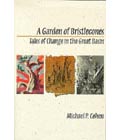 Cohen, Michael P. 1998. A Garden of Bristlecones: Tales of Change in the Great Basin. University of Nevada Press.
Buy it! (Softcover)
Click HERE for a review.
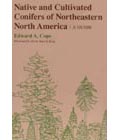 Edward A. Cope and Bente S. King (Illustrator). 1993. Native and Cultivated Conifers of Northeastern North America: A Guide.
Buy it! (Hardcover)
Buy it! (Softcover)
A useful manual to identify the native and cultivated conifers of northeastern North America. The territory covered is roughly eastern Canada and the northeastern United States, from Maine to the southern border of Pennsylvania, west to Kansas. Because it includes so many cultivated species, the book treats many conifers found in the western United States and Europe, totaling 27 genera and 130 species.
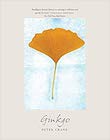
Peter Crane and Pollyanna von Knorring. 2015. Ginkgo: The Tree That Time Forgot.
Buy it! (Hardcover)
Buy it! (Softcover)
Buy it! (Kindle)
Inspired by the historic ginkgo that has thrived in London’s Kew Gardens since the 1760s, botanist Peter Crane explores the history of the ginkgo from its mysterious origin through its proliferation, drastic decline, and ultimate resurgence. Crane also highlights the cultural and social significance of the ginkgo: its medicinal and nutritional uses, its power as a source of artistic and religious inspiration, and its importance as one of the world’s most popular street trees.
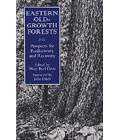 Davis et al. 1996. Eastern Old-Growth Forests: Prospects For Rediscovery And Recovery. Island Press.
Buy it! (Hardcover)
Buy it! (Softcover)
Buy it! (Kindle)
Authoritative essays from leading experts examine the ecology, history cultural importance, and preservation of eastern old growth. The book provides a thorough over-view of the importance of old growth in the East including its extent, qualities, and role in wildlands restoration. It will serve a vital role in furthering preservation efforts by making eastern old-growth issues better known and understood.
 Z. Debreczy and I. Racz. 2012. Conifers around the world. Dendropress Ltd. 2 vols.
Buy it! (Hardcover)
This superb reference gives a full overview of the world’s temperate-zone conifers and taxads, covering 534 species.
 Lawrence S. Earley. 2004. Looking For Longleaf. Chapel Hill and London: University of North Carolina Press. 322pp.
Buy it! (Hardcover)
Buy it! (Softcover)
Buy it! (Kindle)
Highly recommended for its insights to the ecology and ethnobotany of the species, and its historical information, but also because it's an interesting story very well written--a good read, regardless of whether you care about Pinus palustris.
 James E. Eckenwalder. 2009. Conifers of the World. Portland, OR: Timber Press.
Buy it! (Hardcover)
Recently published compilation of most of the world's conifer species. The number has been reduced by lumping quite a few taxa, and the treatment of each is necessarily brief, and there are a fair number of minor errors; but let's not quibble. Dr. Eckenwalder has done a fine job here, and at a very reasonable price. Recommended, especially if you can't meet the price of Dr. Farjon's 2010 encyclopedia of the conifers.
 Neal J. Enright and Robert S. Hill (Editors). 1996. Ecology of the Southern Conifers
Buy it! (Hardcover)
"Southern" as in the Southern hemisphere. If you are interested in the ecology of the Podocarps, Araucarias and esoteric southern Cupressaceae, then there is simply no alternative to this book; it is unique in the field.
 Aljos Farjon and Denis Filer. 2013. An Atlas of the World's Conifers. Brill.
Buy it! (Hardcover)
This is the first ever atlas of all known conifer species, based on the Conifers of the World database. The Atlas includes distribution maps and biogeographical detail for all conifer taxa from family to infra-specific taxa. Patterns of distribution and diversity are extensively discussed and the Atlas contains many photographs of species in their natural habitat. Phylogenetic analyses and the fossil record are referred to where available to explain these patterns.
 Aljos Farjon. 2010. A Handbook of the World's Conifers. Brill.
Buy it! (Hardcover)
"Handbook" is a misnomer, since it consists of two very substantial volumes, but this is the culmination of a lifetime of research by the world's foremost conifer taxonomist. The author is also an exceptionally skilled botanical illustrator, and consequently these volumes are beautifully illustrated.
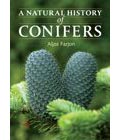 Aljos Farjon. 2008. A Natural History of Conifers. Timber Press.
Buy it! (Hardcover)
Informative, well-written, insightful, attractive, and affordable. If you only have one book about conifers, this should be it. If you have a hundred, this one should occupy a prominent spot on the shelf. Out of print now, used copies are uncommon.
 Aljos Farjon. 2005. Pines : Drawings and Descriptions of the Genus Pinus. Second ed. Brill Academic Publishers. ISBN 9004139168.
Buy it! (Hardcover)
 Aljos Farjon. 1991. Pinaceae : Drawings and Descriptions of the Genera : Abies, Cedrus, Pseudolarix, Keteleeria, Nothotsuga, Tsuga, Cathaya, Pseudotsuga, Larix and Picea. Lubrecht & Cramer Ltd.
Buy it! (Hardcover)
A great book, with great pictures, but now rare and always costly (typically well over $200).
 Aljos Farjon. 2005. A Monograph of Cupressaceae & Sciadopitys. ISBN 1842460000
Buy it! (Hardcover)
Another splendid book by the world's ranking conifer taxonomist. It is thick (648 pages), heavy (3.25 kg), and expensive (about $270), but incomparable.
 Aljos Farjon and B.T. Styles. 1997. Pinus (Pinaceae). Flora Neotropica Monograph 75. New York, NY: The New York Botanical Garden.
Buy it! (Hardcover)
Still the current state of the art if you want one book to cover the pines of Mexico and Central America. Excellent supplementary material on anatomy, pollen morphology, ethnobotany, etc. Outstanding line drawings by Rosemary Wise. Out of print now, used copies are uncommon.
Carl E. Fiedler and Stephen F. Arno. 2015. Ponderosa: People, Fire, and the West's Most Iconic Tree.
Buy it! (Softcover)
Buy it! (Kindle)
An excellent, easily read synthesis of the ecological literature that will be useful for anyone who wants to know more about ponderosa pine.
Bill Finch, Beth Maynor Young, Rhett Johnson and John C. Hall. 2012. Longleaf, Far as the Eye Can See. University of North Carolina Press. 176 pp.
Buy it! (Hardcover)
Buy it! (Kindle)
Like Earley's book Looking for Longleaf (above), an exploration of the once and future ecological and social importance of Pinus palustris; this book, in addition, contains many superb color photographs.
 Wendell Flint. 2002. To Find the Biggest Tree.
Buy it! (Softcover)
An account of two men and their lifelong quest to seek out and record, in all their majesty, contenders for the title of the earth's largest living thing. Big Tree hunter Wendell Flint, takes you on a journey filled with facts, legends, and rumors. From the largest to the tallest, to the strange, and unusual - including the tree you can drive through - this book will take you there.
 Jerry F. Franklin and C.T. Dyrness. 1988. Natural vegetation of Oregon and Washington. Corvallis, OR: Oregon State University Press.
Buy it! (Hardcover)
Buy it! (Softcover)
This classic text, still frequently used and cited, is a rich and readable resource on the ecology and plant communities of the Pacific Northwest (most of which are dominated by conifers). About the only thing it lacks is color photography, and an updated bibliography. If you just want an electronic copy, there are free PDF downloads out there.
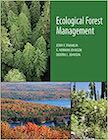
Jerry Franklin, Norm Johnson, and Debora L. Johnson. 2018. Ecological Forest Management.
Buy it! (Softcover)
Buy it! (eTextbook)
Fundamental changes have occurred in all aspects of forestry over the last 50 years, including the underlying science, societal expectations of forests and their management, and the evolution of a globalized economy. This textbook comprehensively integrates this new knowledge of forest ecosystems and human concerns and needs into a management philosophy applicable to the vast majority of forest lands. Ecological forest management (EFM) is focused on policies and practices that maintain the integrity of forest ecosystems while achieving environmental, economic, and cultural goals of human societies. EFM uses natural ecological models as its basis contrasting it with modern production forestry, which is based on agronomic models and constrained by required return-on-investment. Sections of the book consider: 1) Basic concepts related to forest ecosystems and silviculture based on natural models; 2) Social and political foundations of forestry, including law, economics, and social acceptability; 3) Important current topics including wildfire, biological diversity, and climate change; and 4) Forest planning in an uncertain world from small privately owned lands to large public ownerships. The book concludes with an overview of how EFM can contribute to resolving major 21st century issues in forestry, including sustaining forest dependent societies.
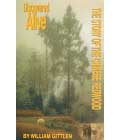 William B. Gittlen. 1999. Discovered Alive; The Story of the Chinese Redwood. Pierside Publishing.
Buy it! (Softcover)
In 1941, a Chinese forester chanced upon an unknown type of conifer growing in central China. A Berkeley paleobotanist traveled with a S.F. Chronicle newspaper reporter to view this living tree (Metasequoia glyptostroboides), which had been thought extinct for 20 million years. Fifty years after their expedition, the author retraced the steps of these two scientists to the hinterlands of China to learn what had become of the trees that the men had risked so much to see. Along the way, the reader is treated to descriptions of rural China, stories of other venerable trees, extraordinary tales of dedicated Asian plant collectors, and even musings on the serendipity of history itself. Includes 36 photographs and illustrations, a bibliography, and an index.
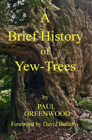 Paul Greenwood. 2013. A Brief History of Yew-Trees. Newcastle upon Tyne, UK: Paul Greenwood.
Buy it! (Kindle)
This book details the compelling, mysterious and intriguing presence yew trees have had both in the overall history of humanity and the particularly branch of it grown upon the British Isles.
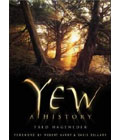 Fred Hageneder. 2007. Yew: A History. Sutton Publishing.
Buy it! (Hardcover)
Buy it! (Softcover)
Although it has a few inaccuracies with respect to biology, this is an attractive and highly informative book about yews.
 Hal Hartzell Jr. 1991. The yew tree: a thousand whispers. Eugene, Oregon: Hulogosi L.L.C.
Buy it! (Softcover)
The story of the yew tree is thousands of years old. Hartzell traces the tree's history and mythology and then describes the ancient yew trees that survive in English churchyards, probably because the churches were built on pagan sites sacred to the yew tree. He also discusses the use of taxol and the conservation of the Pacific yew.
 Harvey, H.T. 2003. The sequoias of Yosemite National Park.
Buy it! (Softcover)
Attractive, brief but highly informative book with lots of color photos and information on the Giant Sequoia trees of Yosemite National Park. There are helpful segments on the hiking trails here, as well info on individual/noteworthy trees.
 Peter Johnstone and Peter E. Palmquist. 2000. Giants in the Earth: The California Redwoods.
Buy it! (Softcover)
The redwood tree has long been a national icon for nature and conservation, and few natural wonders has stimulated so much writing. This highly illustrated literary anthology, with diverse selections that span more than 300 years, provides a unique and complete view of the tree's place in history and the imagination. With over fifty photographs, paintings, lithographs, and other graphics.
 David L. Jones. 1993, rev. 1998. Cycads of the World (second edition). Australia: Reed Natural History.
Buy it! (Hardcover)
This and Whitelock are the only books I know that seek to provide a comprehensive review of cycad species. It is a bit dated due to the continuing description of new taxa, but is well written with many beautiful photographs.
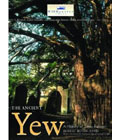 Robert Bevan Jones. 2004. Ancient Yew: A History of Taxus Baccata (2nd ed.). Windgather Press.
Buy it! (Softcover)
Ancient yew trees, many of which may be over a thousand years old, are still common features in many areas of Britain, frequently found in churchyards and large formal gardens. The yew has an important place in the British landscape and cultural heritage and here Robert Bevan-Jones discusses its history, biology, the origins of its name, the yew berry and its toxicity, its distribution across Britain, means of dating examples, and their association with folklore, with churchyards, abbeys, springs, pre-Reformation wells and as landscape markers. Includes a gazetteer of examples.
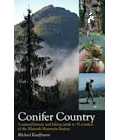 Michael Kauffmann. 2012. Conifer Country. Kneeland, CA: Backcountry Press.
Buy it! (Softcover)
A very nicely done field guide-plus-guidebook to the Klamath-Siskiyou Bioregion, which has the highest conifer diversity of any comparably-sized area in North America: 35 species. Readable, well illustrated, and features some fantastic hikes. I also recommend you check out the website at conifercountry.com.
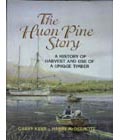 Garry Kerr and Harry McDermott. 1999. The Huon Pine Story. Portland, Victoria: Mainsail Books.
Buy it! (Softcover)
There aren't many books on Huon pine; this one looks pretty good. It provides an historical perspective on the harvest and use of this species, which is now protected.
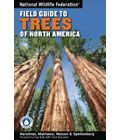 Kershner, Tufts, Matthews and Nelson. 2007. National Wildlife Federation Field Guide to Trees of North America.
Buy it! (Softcover)
A useful book, if you want a single portable field guide that covers the native trees of the entire continental U.S. and Canada.
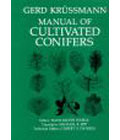 Gerd Krussman, et al. 1985. Manual of Cultivated Conifers.
Buy it! (Hardcover)
Buy it! (Softcover)
One of the most authoritative sources for the horticultural enthusiast, Krussman is generally very accurate, with good descriptions and some of the best line drawings to be found in print. The taxonomy, however, is rather dated, and there is very little ecological information presented.
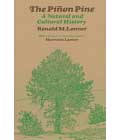 Ronald M. Lanner. 1981. The Piñon Pine : A Natural and Cultural History. Univ of Nevada Press.
Buy it! (Softcover)
Buy it! (Kindle)
A well-written and often witty survey of the natural history of piñon pines, spiced with observations on their importance to the native Indians and subsequent European settlers. The engaging text and copious pictures make it difficult to put the book down, and the appendix of recipes for pine-nut dishes is an added bonus.
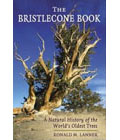 Ronald M. Lanner. 2007. The Bristlecone Book: A Natural History of the World's Oldest Trees. Missoula, MT: Mountain Press. 128 pp.
Buy it! (Softcover)
Buy it! (Kindle)
Ronald Lanner exposes the trees' inner workings, taking apart a pine to examine bark, buds, needles, cones, roots, and wood. He follows a tree's lifespan from seedling to great old age, presenting a new interpretation of stages of growth. He explains the unusual colors and forms that make bristlecones so picturesque, describes how the forces of nature influence the trees unique shapes, and reveals their secrets of long life. Readers will discover where to go to see these trees and how to identify them. A stunning pageant of color photos shows off bristlecones and their remarkable growth patterns, and a map shows locations of groves.
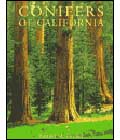 Ronald M. Lanner. 1999. Conifers of California. Cachuma Press.
Buy it! (Softcover)
Technically accurate yet very readable descriptions of each of California's 50-odd conifer species are accompanied by beautiful full-page watercolor illustrations of cone and leaf detail, and superb color photos, many by well-known artists. Identification aids include keys, and the book is compact enough to carry around as you explore California's huge and accessible conifer flora. Revised 2nd edition contains updates on several species.
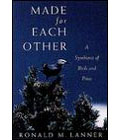 Ronald M. Lanner. 1996. Made for Each Other: A Symbiosis of Birds and Pines. Oxford University Press.
Buy it! (Hardcover)
Buy it! (Softcover)
Buy it! (Kindle)
This is one of the few "specialist" books that I frequently find myself recommending to people who are just looking for a good read. Although written with proper academic rigor, this exploration of corvid-pine symbiosis is filled with interesting tidbits that you will find yourself regurgitating at need. For instance, did you know that a nutcracker may bury over 25,000 seeds over the course of a season - and then, come winter, remember where it put every one of them? Ron Lanner was a fine writer and this is widely considered his best book. Enjoy.
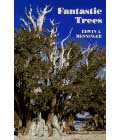 Edwin A. Menninger. 1995. Fantastic Trees. Timber Press.
Buy it! (Hardcover)
Buy it! (Softcover)
A remarkable book, of special interest to young naturalists, that presents a gallery of trees that thrust their roots into the air, produce flowers and fruit underground, tell time, make noises, change sex, commit suicide, or create their own rain.
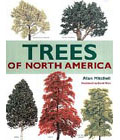 Alan Mitchell and David More. 2003. Trees of North America. Thunder Bay Press.
Buy it! (Hardcover)
Buy it! (Softcover)
Lavishly illustrated in color, this is a guide to the native and introduced species. Each tree is pictured as it would appear in a typical landscape, with each of its features -- such as seasonal changes, leaf shape, flowers, seeds, bark -- illustrated and labeled. Written by dendrologist Alan Mitchell and illustrated by tree artist David More, this book will delight the naturalist and the gardener alike.
 Nancy R. Morin (Editor). 1993. Flora of North America North of Mexico : Pteridophytes and Gymnosperms. Oxford Univ Press.
The whole contents are available online, but if you want all the gymnosperms of North America between hardcovers, here it is.
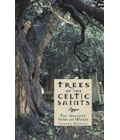 Andrew Morton. 2009. Trees of the Celtic Saints - the Ancient Yews of Wales. Gwasg Carreg Gwalch.
Buy it! (Softcover)
I've never seen this book, and Amazon doesn't review it. It just looks interesting.
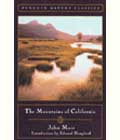 John Muir. 1894. The Mountains of California.
Buy it! (Hardcover)
Buy it! (Softcover)
Buy it! (Kindle)
Muir's chapter on forest trees of the Sierra Nevada is a classic of the botanical literature, accurate enough to be useful today (apart from numerous changes in taxonomic nomenclature) and yet wonderfully poetic and evocative. I would call this one of the ten best natural history studies ever written, a fitting companion to books (regrettably, almost devoid of gymnosperm natural history) such as "Voyage of the Beagle" and "A Sand County Almanac."
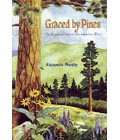 Alexandra L. Murphy, Robert Petty (Illustrator) and Kathleen Ort (Editor). 1994. Graced by Pines: The Ponderosa Pine in the American West. Mountain Press.
Buy it! (Softcover)
These nine essays abound in intriguing facts and stories relating to the ponderosa from the author's perspective as a naturalist and biologist, as well as yielding thought-provoking meditations on biological processes, forestry practices and myths and traditions of settlers and native people.
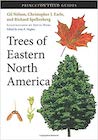
Gil Nelson, Christopher J. Earle, and Richard Spellenberg. 2014. Trees of Eastern North America. Princeton University Press.
Buy it! (Softcover)
Buy it! (Kindle)
I wrote the conifer portion of this text. In preparing these guides (see also Spellenberg et al.), it was our goal to produce the best general guidebook available to native and important cultivated trees in North America, and I believe we succeeded. We had David More prepare paintings, we used Elbert Little's map data, and we had substantial reviews by other authorities. This volume covers 825 species, more than any other field guide to the region. See the Amazon link for sample pages andi further reviews.
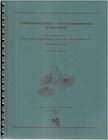 Hubertus Nimsch. 1995. A Reference Guide to the Gymnosperms of the World. Balogh Scientific Books.
Buy it! (Softcover)
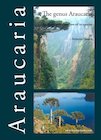 Hubertus Nimsch. 2018. The genus Araucaria: An illustrated overview of its species. Norbert Kessel.
Buy it! (not Amazon).
This is the best thing ever published about Araucaria. The photos and illustrations are top-quality and the scholarship is likewise. The first 34 pages provide an overview of issues such as phylogeny, distribution, conservation, and genus-level biology, and the next 180 pages describe each species in detail. Closing sections include essays on scientific history, distinctive features, seeds, seedlings, wood characteristics, cultivation, and conservation. Highly recommended. Note that alternative editions, available from the same source, have been published in German and French.
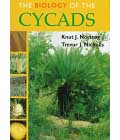 Knut J. Norstog and Trevor J. Nicholls. 1997. The biology of the cycads. Ithaca, NY: Cornell University Press.
Buy it! (Hardcover)
An outstanding reference source. Chapters treat: General features, genera and relationships; Anatomy of the stems, leaves and roots; Reproduction and embryo development; Physiology and growth; Population biology and pollination dynamics; The fossil cycadophytes; Old world genera and species; and New world genera and species. The 134 color illustrations provide an added treat.
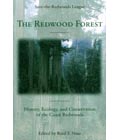 Reed F. Noss (ed.). 1999. The Redwood Forest: History, Ecology, and Conservation of the Coastal Redwoods. Island Press. 366pp.
Buy it! (Hardcover)
Buy it! (Softcover)
Buy it! (Kindle)
"The Redwood Forest provides scientific guidance for saving the redwood forest by bringing together in a single volume the latest insights from conservation biology along with new information from data-gathering techniques such as GIS and remote sensing. It presents the most current findings on the geologic and cultural history, natural history, ecology, management, and conservation of the flora and fauna of the redwood ecosystem. Leading experts-including Todd Dawson, Bill Libby, John Sawyer, Steve Sillett, Dale Thornburgh, Hartwell Welch, and many others-offer a comprehensive account of the redwoods ecosystem." I will just add that this is the best book on redwood ecology.
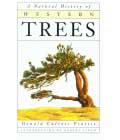 Donald Culross Peattie, Donald Wyman, and Paul Landacre (Illustrator). 1991. A Natural History of Western Trees. Houghton Mifflin Co. [originally published 1950].
Buy it! (Hardcover)
Buy it! (Softcover)
Buy it! (Kindle)
Peattie's books are in a class with other great nature writers (John Muir, Edwin Teale, Norman Maclean, etc.). He was an observant and astute naturalist, who obviously loved each of the species of trees he wrote about. Peattie's wonderful stories combined with Paul Landacre's illustrations make this a book for the ages.
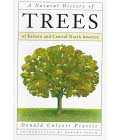 Donald Culross Peattie, Donald Wyman, and Paul Landacre (Illustrator). 1991. A Natural History of Trees of Eastern and Central North America. Houghton Mifflin Co. [originally published 1950].
Buy it! (Hardcover)
Buy it! (Softcover)
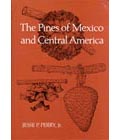 Jesse P. Perry. 1991. The Pines of Mexico and Central America. Timber Press.
Buy it! (Hardcover)
Buy it! (Softcover)
If you want to travel in Mexico and have any hope of distinguishing the 47 different species of native pines (not counting significant varieties and subspecies), then you need to carry two books: this one and Farjon & Styles, listed above. Farjon & Styles is better on science and taxonomy, but Perry tells better stories.
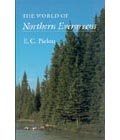 E.C. Pielou. 1988. The World of Northern Evergreens.
Buy it! (Hardcover)
Buy it! (Softcover)
Pielou uses clear, non-technical prose and beautiful pen-and-ink illustrations to take us through the key species and ecological relationships of the boreal forest. Pielou is a master ecologist and writer, and this book is just the right size to sling into your backpack as you head off for a field station this winter, or to have by your bed when you get back.
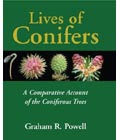 Graham R. Powell. 2009. Lives of Conifers: A comparative account of the coniferous trees. Johns Hopkins University Press.
Buy it! (Hardcover)
Buy it! (Softcover)
A reviewer says "Graham Powell has written an insightful and beautifully illustrated book on the lives of conifers. Everyone who works with, studies, and loves these trees will derive both knowledge and pleasure from learning about them in great detail. I have always had a special fondness for the conifers and their mystical and inspiring representatives like the massive redwoods and the bleak denizens of the boreal forests, the spruces. Powell's book does them their well-deserved justice."
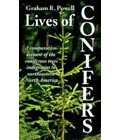 Graham R. Powell. 2009. Lives of Conifers: A comparative account of the coniferous trees indigenous to Northeastern North America. Fitzhenry & Whiteside.
Buy it! (Hardcover)
Buy it! (Softcover)
The outstanding field guide for the area.
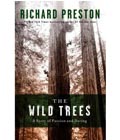 Richard Preston. 2006. The Wild Trees. New York: Random House.
Buy it! (Hardcover)
Buy it! (Softcover)
Buy it! (Kindle)
This book has generated a lot of attention for climbing trees in general. For the most part I don't hold with climbing exceptional trees, because climbing, even when done in the most careful way possible, has a high potential of irreparably damaging the trees. However, climbing for science is another matter, and Preston provides an eminently readable account of the extraordinary new discoveries being made by scientists working in the forest canopy. This book particularly focuses on recent work with Sequoia sempervirens.
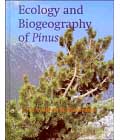 Richardson, D.M. (ed.). 1998. Ecology and Biogeography of Pinus. Cambridge University Press.
Buy it! (Hardcover)
Buy it! (Softcover)
An outstanding volume, representing the work of 40 recognized experts, with 22 chapters addressing subjects as diverse as systematics, late Quaternary population dynamics, regional surveys, the role of fire, the evolution of life histories, genetic variation, seed dispersal, ecophysiology, mycorrhiza and soils, diseases and insect interactions, cultivation, and pines as invaders in the southern hemisphere.
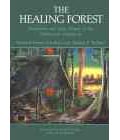 Richard Evans Schultes and Robert F. Raffauf. 1990. The healing forest: medicinal and toxic plants of the northwest Amazonia. Portland, OR: Dioscorides Press.
Buy it! (Hardcover)
The destruction of the Amazon forests continues, and with them an unknown number of plant species and the traditional knowledge of their medicinal uses. Schultes and Raffauf combine nearly half a century of field research in this least studied part of the Amazonian drainage area to document and describe 1,479 species and variants, representing 596 genera in 145 plant families (including a number of gymnosperms). Of these, half have had little or no prior investigation of their chemical and pharmacological properties.
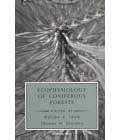 William K. Smith and Thomas M. Hinckley (Editors). 1994. Ecophysiology of Coniferous Forests.
Buy it! (Hardcover)
Buy it! (Kindle)
I admit it, I've long had a fondness for physiological ecology, and I particularly recommend this book because I have studied (at least briefly) under both authors. If you are interested in the nuts and bolts of how trees actually work, this and the book below provide an excellent introduction.
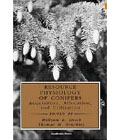 William K. Smith and Thomas M. Hinckley (Editors). 1994. Resource Physiology of Conifers: Acquisition, Allocation, and Utilization. Academic Press.
Buy it! (Hardcover)
Buy it! (Kindle)
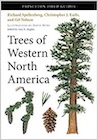
Richard Spellenberg, Christopher J. Earle, and Gil Nelson. 2014. Trees of Western North America. Princeton University Press.
Buy it! (Hardcover)
Buy it! (Softcover)
Buy it! (Kindle)
I wrote the conifer portion of this text. In preparing these guides (see also Nelson et al.), it was our goal to produce the best general guidebook available to native and important cultivated trees in North America, and I believe we succeeded. We had David More prepare paintings, we used Elbert Little's map data, and we had substantial reviews by other authorities. This volume covers 630 species, more than any other field guide to the region. See the Amazon link for sample pages and further reviews.
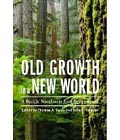 Tom Spies and Sally Duncan (Editors). 2008. Old Growth in a New World: A Pacific Northwest Icon Reexamined. Island Press.
Buy it! (Hardcover)
Buy it! (Softcover)
Buy it! (Kindle)
Old-growth forests represent a lofty ideal an icon of unspoiled nature, ecological stability, and pristine habitat. These iconic notions have actively altered the way society relates to old-growth forests, catalyzing major changes in policy and management. But how appropriate are those changes and how well do they really serve in reaching conservation goals? Old Growth in a New World untangles the complexities of the old growth concept and the parallel complexity of old-growth policy and management. It brings together more than two dozen contributors—ecologists, economists, sociologists, managers, historians, silviculturists, environmentalists, timber producers, and philosophers—to offer a broad suite of perspectives on changes that have occurred in the valuing and management of old-growth forests in the Pacific Northwest over the past thirty years. By confronting the complexity of the old-growth concept and associated policy and management challenges, Old Growth in a New World encourages productive discussion on the future of old growth in the Pacific Northwest and offers options for more effective approaches to conserving forest biodiversity.
 Dennis Wm. Stevenson. 1990. The Biology, Structure, and Systematics of the Cycadales : Proceedings of the Symposium Cycad 87, Beaulieu-Sur-Mer, France, April 17-22, 1987). New York Botanical Garden.
Buy it! (Softcover)
This volume comprises papers presented at the CYCAD 87 Symposium. The symposium's emphasis was on current research trends on the Cycadales. Included in this collection are sections on morphology, reproductive biology and vegetative propagation, cytology, physiology, ecology, ethnobotany, and systematics.
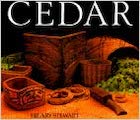 Hilary Stewart. 2000. Cedar.
Buy it! (Hardcover)
Buy it! (Softcover)
From the giant cedar of the rainforest came a wealth of raw materials vital to the way of life, art and culture of the early First Nations people of the Northwest Coast. All parts of the cedar tree had use. From the wood, came ocean-going canoes, massive post-and-beam houses, monumental carved poles that declared history, rights and lineage, and powerful dance masks. Women wove the inner bark into mats and baskets, plied it into cordage and netting or processed it into soft, warm, water-repellent clothing. They also made the strong withes into heavy-duty rope and wove the roots into watertight baskets. Hilary Stewart explains, through her vivid descriptions, 550 detailed drawings and 50 photographs, the tools and techniques used, as well as the superbly crafted objects and their uses--all in the context of daily and ceremonial life. Anecdotes, oral history and the accounts of early explorers, traders, missionaries and native elders highlight the text.
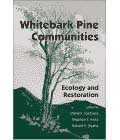 Diana F. Tomback, Stephen F. Arno and Robert E. Keane (eds). 2000. Whitebark Pine Communities: Ecology and Restoration.
Buy it! (Hardcover)
Buy it! (Softcover)
Whitebark pine is a dominant feature of western high-mountain regions, offering an important source of food and high-quality habitat for species ranging from Clark's nutcracker to the grizzly bear. But in the northwestern United States and southwestern Canada, much of the whitebark pine is disappearing. Why is a high-mountain species found in places rarely disturbed by humans in trouble? And what can be done about it? Whitebark Pine Communities addresses those questions, explaining how a combination of altered fire regimes and fungal infestation is leading to a rapid decline of this once-abundant species.
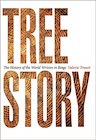
Valerie Trouet. 2020. Tree Story. Johns Hopkins Press.
Buy it! (Hardcover)
Buy it! (Softcover)
Buy it! (Kindle)
The world has been waiting a long time (over 100 years) for someone to write a nontechnical book about the wonders of dendrochronology. Now we have that book. Recommended.
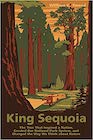
William C. Tweed. 2016. King Sequoia: The Tree That Inspired a Nation, Created Our National Park System, and Changed the Way We Think about Nature.
Buy it! (Softcover)
Buy it! (Kindle)
From a towering tree, one of California's preeminent naturalists unspools a history that echoes across generations and continents. Former park ranger William C. Tweed takes readers on a tour of the Big Trees in a narrative that travels deep into the Sierras, around the West, and all the way to New Zealand; and in doing so he explores the American public's evolving relationship with Sequoiadendron. It comes as no surprise that the groves in Yosemite and Calaveras were early tourist destinations, as this species was the embodiment of California's superlative, almost unbelievable appeal. When sequoias were threatened by logging interests, the feelings of horror that this desecration evoked in people catalyzed protection efforts; in a very direct way, this species inspired the Park Idea. And sequoias' influence doesn't end there: as science evolved to consider landscapes more holistically, sequoias were once again at the heart of this attitudinal shift. Featuring an entrancing cast of adventurers, researchers, politicians, and environmentalists, King Sequoia reveals how one tree species has transformed Americans' connection to the natural world.
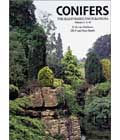 D. M. Van Gelderen et al. 1996. Conifers : The Illustrated Encyclopedia.
Buy it! (Hardcover)
Van Gelderen is a horticulturalist, and this pair of volumes makes a very strong attempt to illustrate, with glossy color photographs, every taxon and cultivar of conifer. It is getting a bit dated, but is widely available on the used market for a reasonable price.
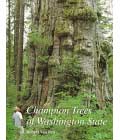 Robert Van Pelt. 1996. Champion Trees of Washington State. University of Washington Press.
Buy it! (Softcover)
Due to this book's age, many of the immensely large or old trees shown here have died; but many still persist, and many are the largest known in their species.
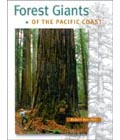 Robert Van Pelt. 2001. Forest Giants of the Pacific Coast. University of Washington Press.
Buy it! (Softcover)
This book is essential if you are interested in the largest trees of the world, most of which grow in western North America. It presents the five largest known trees of each of the largest 20 species in this region. It is also essential if you are interested in botanical illustration, as the author presents some of the finest line drawings ever produced of really large trees.
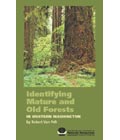 Robert Van Pelt. 2007. Identifying Mature and Old Forests In Western Washington. Washington State Department of Natural Resources.
Highly recommended for its clear exposition of the distinctive structure of these forests and for the many fine line drawings showing the range of morphological variation in dominant trees of these forests.
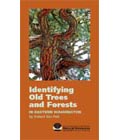 Robert Van Pelt. 2008. Identifying Old Trees and Forests In Eastern Washington. Washington State Department of Natural Resources.
Even better than the 2007 volume!
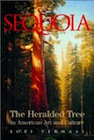
Lori Vermaas. 2003. Sequoia: The Heralded Tree In American Art and Culture. Smithsonian Books. 288 pp.
Buy it! (Hardcover)
One of the few books to discuss Americans' cultural (rather than economic or biological) relationship with their forests.
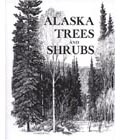 L. A. Viereck and E. L. Little, Jr. 1972. Alaska trees and shrubs. U.S.D.A. Agricultural Handbook 410. Washington, D.C.: U.S. Department of Agriculture.
Buy it! (Hardcover).
Buy it! (Softcover).
This has been the definitive work on the woody plants of Alaska for decades, and this, the second edition, provides updated information on habitat, as well as detailed descriptions of every tree or shrub species in the state. New distribution maps reflect the latest survey data, while the keys, glossary, and appendix on non-native plants make this the most useful guide to Alaska trees and shrubs ever published.
Henriette Walter and Pierre Avenas. 2017. La Majestueuse Histoire Du Nom Des Arbres. Editions Robert Laffont, 564 pp.
Buy it! (not Amazon).
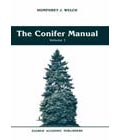 Humphrey James Welch. 1991. The Conifer Manual (Forestry Sciences, Vol 34).
Buy it! (Hardcover)
Buy it! (Softcover)
Old, hard to find, expensive, and one of the most useful texts ever produced for conifer gardeners.
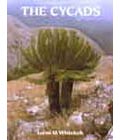 Loren Whitelock. 2002. The Cycads. Timber Press.
Buy it! (Hardcover)
A comprehensive review of cycad species. It is a bit dated due to the continuing description of new taxa, but is well written with many beautiful photographs.
 Wilcox and Bieleski (eds.). 2009. Araucariaceae: Proceedings of the 2002 Araucariaceae Symposium. International Dendrology Society.
UNAVAILABLE as of 2020. Check the used market.
The most comprehensive treatment of the Araucariaceae ever published.
 Claire G. Williams (ed.). 2006. Landscapes, Genomics and Transgenic Conifers (Managing Forest Ecosystems). The Netherlands: Springer.
Buy it! (Hardcover)
Buy it! (Softcover)
Buy it! (Kindle)
What is the future of genetically modified (or transgenic) conifer plantations? This edited volume addresses this question using language drawn from policy, forest history, genomics, metabolism, pollen dispersal and gene flow, landscape ecology, evolution, economics, technology transfer and regulatory oversight. Although the book takes its title from a Nicholas School Leadership forum held November 17-19, 2004 at Duke University, its contents move past the forum’s deliberations. The 14 chapters were written by a total of 31 authors working in North America, South America, Europe and Africa.
 Claire G. Williams (ed.). 2009 Conifer Reproductive Biology. Kluwer Academic Publishers.
Buy it! (eTextbook)
Buy it! (Hardcover)
Buy it! (Softcover)
When it comes to reproduction, gymnosperms are deeply weird. Cycads and conifers have drawn out reproduction: at least 13 genera take over a year from pollination to fertilization. Since they don’t apparently have any selection mechanism by which to discriminate among pollen tubes prior to fertilization, it is natural to wonder why such a delay in reproduction is necessary. Claire Williams’ book celebrates such oddities of conifer reproduction. She has written a book that turns the context of many of these reproductive quirks into deeper questions concerning evolution.
 Dwight Willard. 2000. A Guide to the Sequoia Groves of California. Yosemite Natural History Assn.
Buy it! (Softcover)
This guide is the first to focus on all the giant sequoia groves in the state of California, not just those that are well-known. The author has identified sixty-seven different groups of these forest giants, and has organized them into five different geographic areas from north of the Kings River to south of the Tule River watershed. Extensive information is provided for each grove including general description and managing agency; historical facts; size, condition, and overall quality; access; and notable trees.
 James Woodford. 2000. The Wollemi Pine: The Incredible Discovery of a Living Fossil From the Age of the Dinosaurs. Australia.
Buy it! (Softcover)
Buy it! (Kindle)
An enthralling detective story about evolution and natural history, and the botanical find of the century: the freak survival of a species that offers a window on to an ecosystem one hundred million years old.
 Christophe d' Yvoire. 2006. Les Patriarches. Seuil; Essais litteraires edition.
Buy it! (Hardcover)
Black-and-white art photographs of bristlecone pines.
Last Modified 2023-12-16


 Back to top